

Назад
The sanctions restrictions of recent years, the growth of industrial development in the Arctic zone of the Russian Federation, the large-scale infrastructure development in the Far North, and the focus on import substitution have significantly changed the structure of demand. Today's customers no longer view all-terrain vehicles as specialized off-road vehicles, but as full-fledged vehicles for everyday use in challenging natural and climatic conditions.
The most popular segment remains wheeled snow and swamp vehicles with ultra-low-pressure tires in 4x4 and 6x6 configurations, combining high cross-country capability, the ability to navigate soft soils, and relative ease of maintenance.
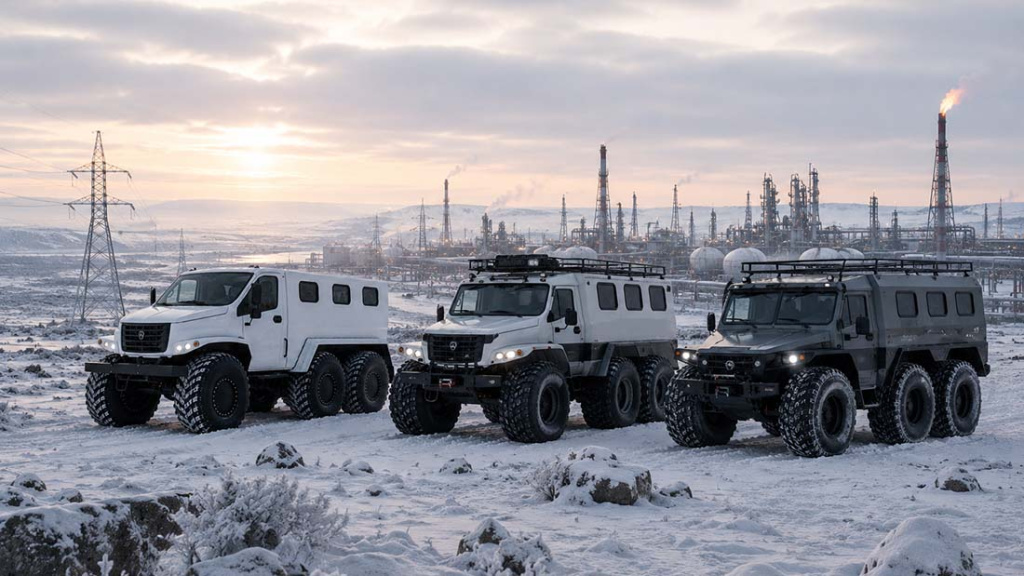
Status of the Russian Market
According to industry experts, the market for wheeled all-terrain vehicles continues to grow steadily. Despite the lack of official statistics, total production is estimated at several hundred vehicles annually, with further growth expected.
The main growth factors are:
– Increasing work volumes in the Arctic zone;
– Development of oil and gas fields in Eastern Siberia and Yamal;
– Development of hard-to-reach areas in the Far East;
– Modernization of emergency rescue units;
– Renewal of government vehicle fleets;
– Expansion of import substitution programs.
While previously a significant portion of the equipment was supplied in small batches for specific projects, today many companies are developing long-term off-road vehicle renewal programs.
Major Consumers
The modern market can be divided into several major segments.
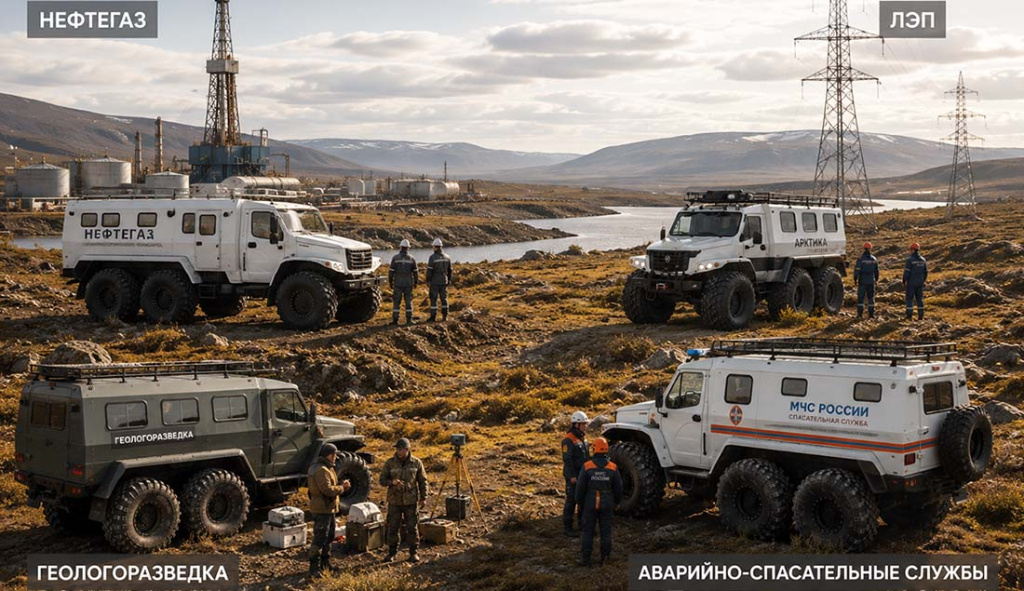
Oil and Gas Industry
The oil and gas industry accounts for a significant portion of the demand for heavy-duty wheeled all-terrain vehicles.
This equipment is used for:
– transporting repair crews;
– transporting equipment;
– servicing pipelines;
– supporting drilling operations;
– operating winter roads;
– working in marshy areas.
Off-road vehicles are particularly popular in Western Siberia, the Yamalo-Nenets Autonomous Okrug, the Khanty-Mansi Autonomous Okrug, Krasnoyarsk Krai, and the Sakha Republic (Yakutia).
Geological Exploration
The growing volume of geological exploration requires reliable equipment capable of operating for long periods away from public roads.
The following are particularly important for this segment:
– range;
– transmission reliability;
– maintainability;
– autonomy;
– the ability to transport equipment and personnel.
Energy
Large energy companies use all-terrain vehicles in the construction and maintenance of power lines, substations, and generation facilities.
Vehicles with high load-carrying capacity and the ability to install specialized equipment are especially important.
Government Agencies
Customers include:
– Departments of the Ministry of Emergency Situations;
– Forestry;
– Environmental organizations;
– Monitoring services;
– Executive authorities of the northern regions;
– Individual units of law enforcement agencies.
In these purchases, equipment reliability, localized production, accessible service, and the ability to manufacture specialized versions play a significant role.
Private Sector
Despite its relatively small size, the private market maintains strong demand.
Major buyers:
– Hunting grounds;
– Travel companies;
– Expeditionary organizations;
– Farms;
– Owners of remote areas.
However, the share of private customers is gradually declining relative to the corporate segment.
Import Substitution
After 2022, Russian manufacturers received additional impetus for development.
While some equipment was previously equipped with imported components, today most manufacturers are actively increasing the level of localization.
At the same time, demand has grown for vehicles fully adapted to Russian operating conditions.
Buyers have begun to pay significantly more attention to:
– Availability of spare parts;
– Cost of ownership;
– Field repair capabilities;
– Independence from foreign suppliers.
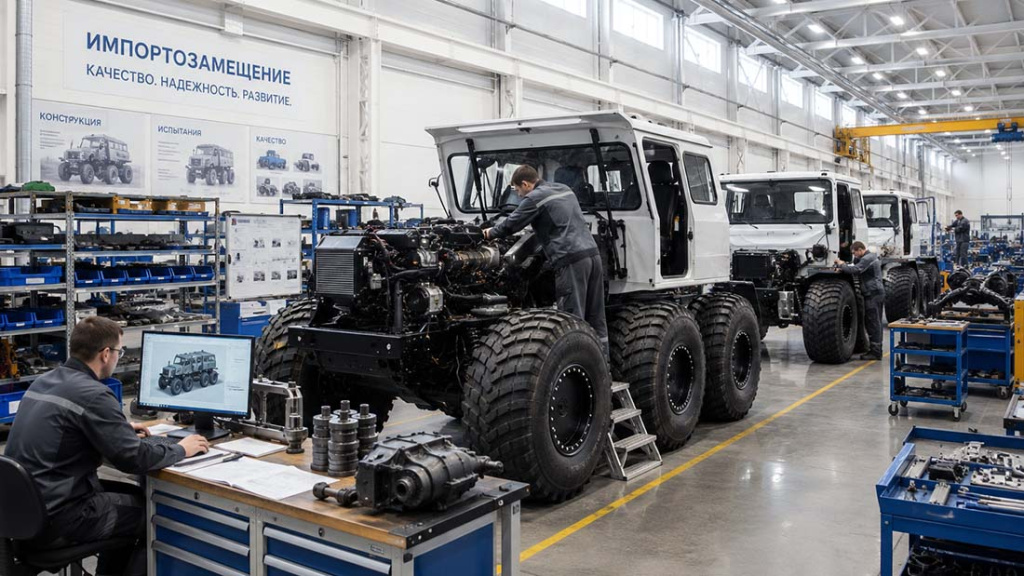
Russian All-Terrain Vehicles - 2026. Import Substitution.
Changing Customer Requirements
In recent years, requirements for wheeled all-terrain vehicles have changed significantly.
While previously the main criterion was maximum cross-country capability, today customers evaluate equipment holistically.
The most important criteria are:
– Service life of components;
– Reliability of design;
– Crew comfort;
– Safety;
– Ease of maintenance;
– Availability of service support;
– The ability to equip with specialized equipment.
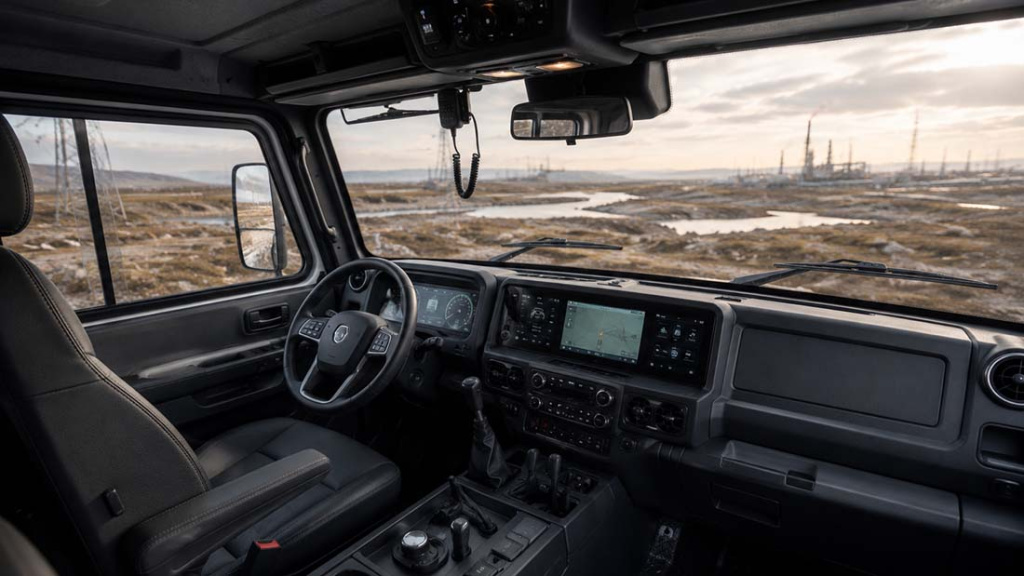
Modern all-terrain vehicles are increasingly viewed as mobile workstations, where crews spend many hours daily.
Therefore, climate control systems, driver ergonomics, sound insulation, efficient heating, and modern navigation tools are gradually becoming industry standards.
Results
The Russian market for wheeled all-terrain vehicles has entered a period of significant development. Demand today is driven not by isolated expedition projects, but by large-scale programs for the industrial development of northern territories and the modernization of corporate fleets.
Reliability, service life, operating comfort, and the ability to adapt to long-term operation in harsh conditions are becoming increasingly important.
Under these conditions, the competitiveness of manufacturers is no longer determined solely by the vehicles' off-road capabilities, but also by their ability to offer a comprehensive solution—from the basic chassis to specialized versions and service support throughout the entire vehicle lifecycle.
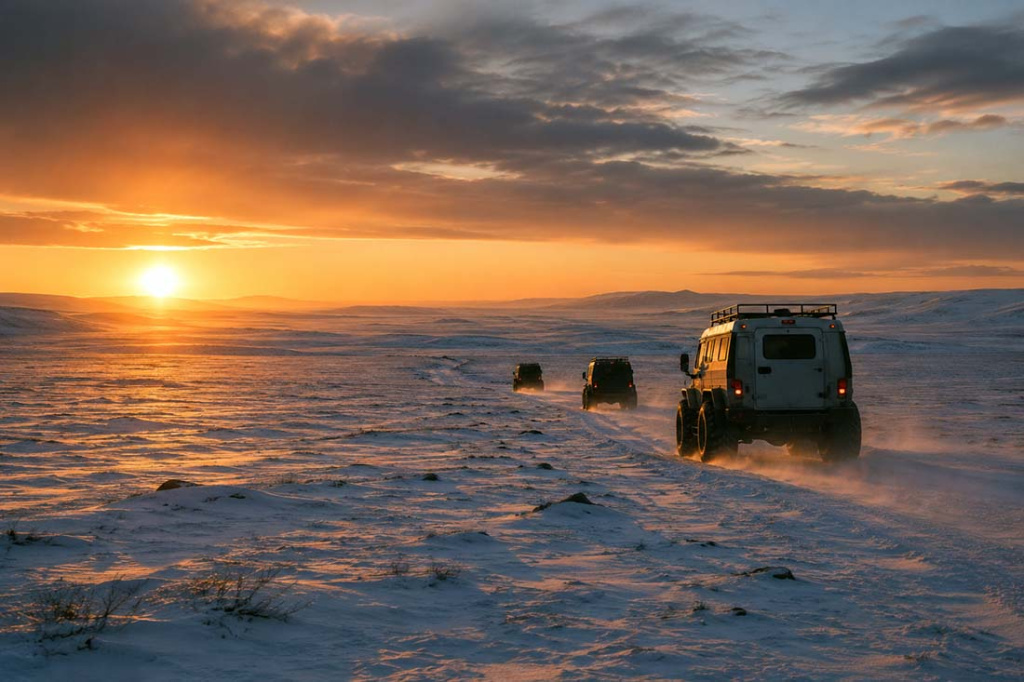
Russian Snow and Swamp-Going Vehicles - 2026
Prepared by the Digital Communications Department
All-Terrain Vehicle Plant LLC
For inquiries regarding the use of materials:
digital@zvm-nn.ru | © 2026
20 July 2026
The Russian market for wheeled snow and swamp-going vehicles in 2026. An analytical review of the industry
Introduction
The Russian market for wheeled snow and swamp vehicles continues to grow rapidly. While ten to fifteen years ago, such vehicles were primarily associated with expeditions, hunting, and the exploration of remote areas, today they have become an important element of the transport infrastructure of the oil and gas industry, energy, geological exploration, forestry, emergency services, and government agencies.The sanctions restrictions of recent years, the growth of industrial development in the Arctic zone of the Russian Federation, the large-scale infrastructure development in the Far North, and the focus on import substitution have significantly changed the structure of demand. Today's customers no longer view all-terrain vehicles as specialized off-road vehicles, but as full-fledged vehicles for everyday use in challenging natural and climatic conditions.
The most popular segment remains wheeled snow and swamp vehicles with ultra-low-pressure tires in 4x4 and 6x6 configurations, combining high cross-country capability, the ability to navigate soft soils, and relative ease of maintenance.
Russian All-Terrain Vehicles - 2026
Status of the Russian Market
According to industry experts, the market for wheeled all-terrain vehicles continues to grow steadily. Despite the lack of official statistics, total production is estimated at several hundred vehicles annually, with further growth expected.
The main growth factors are:
– Increasing work volumes in the Arctic zone;
– Development of oil and gas fields in Eastern Siberia and Yamal;
– Development of hard-to-reach areas in the Far East;
– Modernization of emergency rescue units;
– Renewal of government vehicle fleets;
– Expansion of import substitution programs.
While previously a significant portion of the equipment was supplied in small batches for specific projects, today many companies are developing long-term off-road vehicle renewal programs.
Major Consumers
The modern market can be divided into several major segments.
Oil and Gas Industry
The oil and gas industry accounts for a significant portion of the demand for heavy-duty wheeled all-terrain vehicles.
This equipment is used for:
– transporting repair crews;
– transporting equipment;
– servicing pipelines;
– supporting drilling operations;
– operating winter roads;
– working in marshy areas.
Off-road vehicles are particularly popular in Western Siberia, the Yamalo-Nenets Autonomous Okrug, the Khanty-Mansi Autonomous Okrug, Krasnoyarsk Krai, and the Sakha Republic (Yakutia).
Geological Exploration
The growing volume of geological exploration requires reliable equipment capable of operating for long periods away from public roads.
The following are particularly important for this segment:
– range;
– transmission reliability;
– maintainability;
– autonomy;
– the ability to transport equipment and personnel.
Energy
Large energy companies use all-terrain vehicles in the construction and maintenance of power lines, substations, and generation facilities.
Vehicles with high load-carrying capacity and the ability to install specialized equipment are especially important.
Government Agencies
Customers include:
– Departments of the Ministry of Emergency Situations;
– Forestry;
– Environmental organizations;
– Monitoring services;
– Executive authorities of the northern regions;
– Individual units of law enforcement agencies.
In these purchases, equipment reliability, localized production, accessible service, and the ability to manufacture specialized versions play a significant role.
Private Sector
Despite its relatively small size, the private market maintains strong demand.
Major buyers:
– Hunting grounds;
– Travel companies;
– Expeditionary organizations;
– Farms;
– Owners of remote areas.
However, the share of private customers is gradually declining relative to the corporate segment.
Import Substitution
After 2022, Russian manufacturers received additional impetus for development.
While some equipment was previously equipped with imported components, today most manufacturers are actively increasing the level of localization.
At the same time, demand has grown for vehicles fully adapted to Russian operating conditions.
Buyers have begun to pay significantly more attention to:
– Availability of spare parts;
– Cost of ownership;
– Field repair capabilities;
– Independence from foreign suppliers.
Russian All-Terrain Vehicles - 2026. Import Substitution.
Changing Customer Requirements
In recent years, requirements for wheeled all-terrain vehicles have changed significantly.
While previously the main criterion was maximum cross-country capability, today customers evaluate equipment holistically.
The most important criteria are:
– Service life of components;
– Reliability of design;
– Crew comfort;
– Safety;
– Ease of maintenance;
– Availability of service support;
– The ability to equip with specialized equipment.
Modern all-terrain vehicles are increasingly viewed as mobile workstations, where crews spend many hours daily.
Therefore, climate control systems, driver ergonomics, sound insulation, efficient heating, and modern navigation tools are gradually becoming industry standards.
Results
The Russian market for wheeled all-terrain vehicles has entered a period of significant development. Demand today is driven not by isolated expedition projects, but by large-scale programs for the industrial development of northern territories and the modernization of corporate fleets.
Reliability, service life, operating comfort, and the ability to adapt to long-term operation in harsh conditions are becoming increasingly important.
Under these conditions, the competitiveness of manufacturers is no longer determined solely by the vehicles' off-road capabilities, but also by their ability to offer a comprehensive solution—from the basic chassis to specialized versions and service support throughout the entire vehicle lifecycle.
Russian Snow and Swamp-Going Vehicles - 2026
Prepared by the Digital Communications Department
All-Terrain Vehicle Plant LLC
For inquiries regarding the use of materials:
digital@zvm-nn.ru | © 2026