


 Seven swamp-themed horror stories familiar to every all-terrain vehicle (ATV) crew. Some are funny; others make you stop and listen closely.
Every swamp has its own legends. Every forest trail has its own secrets. And every ATV driver has a story about that one spot where someone confidently declared, "We can make it through here—it’s just a puddle."
On an ordinary night, mysterious sounds might be dismissed as the wind, an owl, or simply an overactive imagination.
But once you find yourself in the middle of a swamp behind the wheel of an all-terrain vehicle (ATV), even a familiar creak can start to sound suspicious.
With Halloween approaching, we’ve rounded up seven sounds that might make a driver’s heart skip a beat—and we’ll also look at when you can simply laugh it off, and when it’s time to take a closer look at your machine.
1. A crunch outside: is someone following you?
At first, you think it’s just a branch. Then, the crunch happens again. And again.
The crew exchanges glances. The driver slows down. A passenger in the back suddenly remembers they have something urgent to take care of back home.
The most unsettling part? The crunching happens right when the ATV comes to a stop.
The Halloween take: A swamp spirit has decided to hitch a ride—apparently, walking through terrain like this isn’t exactly convenient for them, either.
The realistic take: Branches, reeds, ice, small rocks, or other obstacles might be brushing against the hull or the undercarriage. Sometimes, the source of a sound isn’t where you’d expect it to be.
If the crunching persists, gets louder, or is accompanied by unusual vehicle behavior, you should come to a safe stop and inspect any accessible components.
Continuing your journey blindly is not the best idea—even if the spirit you encounter seems friendly.
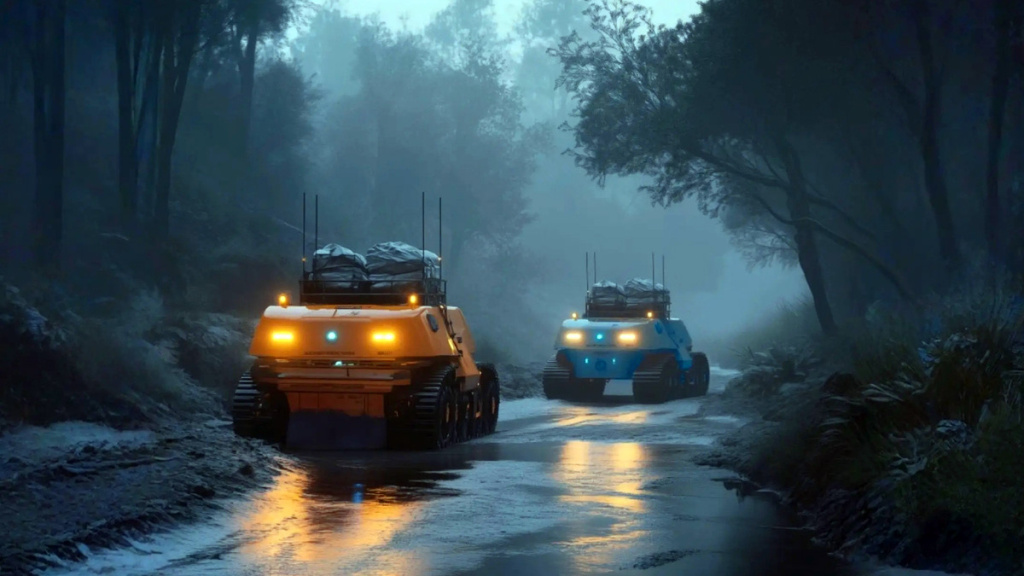 An all-terrain vehicle is built for navigating challenging terrain, but even well-equipped machines have their limits.
2. A gurgle beneath the wheels: the swamp has awakened
The water ripples outward, the ground squelches, and somewhere beneath the chassis, a suspicious gurgling sound emerges.
A passenger asks:
— Is this normal?
— Of course.
The driver replies with confidence—simply because they don’t want to be the first one to say the word "abnormal."
An all-terrain vehicle is built for navigating challenging terrain, but even well-equipped machines have their limits. A vehicle’s behavior depends on water depth, soil properties, payload, and its specific design.
The Halloween version: The swamp is displeased that you’re crossing it without an appointment.
The common-sense version: If the terrain becomes unpredictable, the vehicle noticeably loses momentum, or the situation differs from what you expected, don’t rely solely on enthusiasm to test the limits of your vehicle’s off-road capability. It is better to assess the conditions and follow the manufacturer’s manual.
The phrase “it’s not deep here” is not a measuring instrument.
3. Suspension squeaks: something scratching from within
A faint squeak. Another one. Then a drawn-out sound—as if a ghost with very poor manners has taken up residence in your vehicle.
— Did you hear that?
— Hear what?
— That sound!
— Oh, that! That’s just your jacket rustling!
Sometimes, after five minutes of arguing, it turns out the squeaking is indeed coming from a passenger. But if the sound is linked to the vehicle’s movement, you shouldn’t be so quick to blame it on someone’s clothing.
The Halloween version: Some sort of entity has moved in under the chassis. It demands its own seat and refuses to ride in the trunk.
The mechanic’s version: The squeaking could be caused by friction between components, loose fasteners, issues with the suspension, or other mechanical assemblies—depending on the specific design of the all-terrain vehicle. It is important to note exactly when it occurs: during turns, when driving over uneven surfaces, or when the load changes.
If the squeaking is new, getting worse, or accompanied by play, knocking, or a change in handling And it’s worth checking the vehicle—especially if you’ve just navigated a particularly difficult stretch of the route.
A ghost is, of course, a possibility. But let’s check the mountings first.
4. A dull thud from below: someone knocking on the undercarriage
Boom!
Silence falls inside the vehicle. Even the person who had been talking the whole way about how well they know this area stops mid-sentence.
— What was that?
— Nothing.
— Then why did you stop?
— I didn’t stop. I’m… listening.
The Halloween version: the master of the swamp is knocking from below, asking to be let in. Don’t open up. He almost certainly doesn’t have any identification—and, besides, he has a nasty temper.
The realist version: the thud could be the result of hitting an obstacle or stress placed on the vehicle’s components. However, it’s impossible to determine exactly what happened based on the sound alone.
After a heavy impact, it’s important to assess the situation safely and inspect any parts of the vehicle that are accessible for a check.
If you notice leaks, unusual vibrations, strange noises, or any changes in how the vehicle performs, you shouldn’t keep driving without checking it first.And the golden rule of "swamp horror": if something bangs loudly from underneath, don’t feel the need to prove that your all-terrain vehicle is completely indestructible.
 If the "master of the swamp" knocks from below and asks to be let in—don’t open up. He almost certainly doesn’t have any paperwork.
5. The engine sounds different: the soundtrack has taken a sinister turn
Everything was fine a moment ago—the engine sounded just as it should. But now, it’s as if the genre has shifted: the adventure movie has suddenly turned into a thriller.
The driver listens closely. The passenger listens, too. A minute later, the entire crew is listening intently.
— Has it always sounded like this?
— No.
— Well, how is it *supposed* to sound?
— Let’s find out.
The Halloween theory: an evil spirit has possessed the engine—and it clearly has some very specific musical tastes.
The theory for those who value well-maintained machinery: a change in engine sound can point to various issues—ranging from specific load conditions to an actual mechanical fault. The sound alone isn’t enough to make a diagnosis, but any noticeable change shouldn’t be ignored.
If you encounter unusual noise, engine sputtering, warning lights, a burning smell, overheating, or a loss of power, follow the manufacturer’s instructions and assess whether it is safe to continue driving.
When heading out on a long trip, it’s helpful to know what your vehicle sounds like during normal operation. That way, it’s easier to spot new, unfamiliar sounds—rather than mistaking them for the latest remix by some swamp-dwelling DJ.
6. Suspicious silence: where did the familiar sound go?
Now, *this* is truly frightening.
A second ago, the all-terrain vehicle was moving confidently forward—but now, the familiar sound of the engine has vanished. The driver glances at the instrument panel. The passengers look at the driver. The driver looks back.
No one wants to ask the big question.
The Halloween theory: the swamp has swallowed the sound.
Next, it might even try to swallow your route sheet, too.A realistic take: If the engine stalls or the vehicle suddenly stops working, don’t panic—and don’t keep trying to restart it without knowing the cause. Assess the situation, check your gauges, and follow the operating instructions.
When navigating challenging terrain, it’s especially important to plan your route in advance, account for driving conditions, ensure you have a means of communication, and know exactly what to do if your vehicle breaks down.
Because the worst part about the silence isn’t the silence itself—it’s that you can now hear your passenger slowly opening a bag of sandwiches.
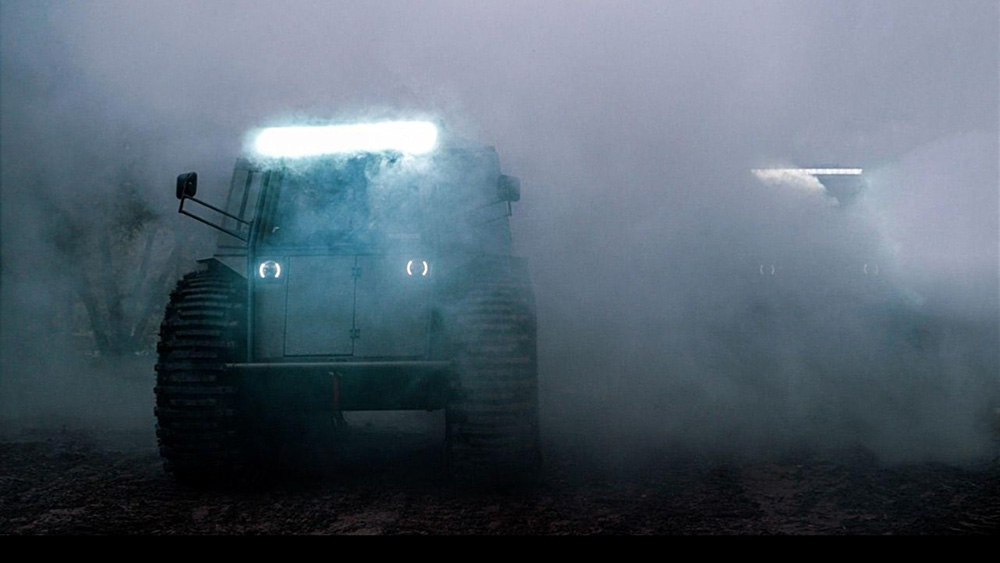 The worst part about the silence isn’t the silence itself
7. “Are you sure we actually turned in here?” — a voice from the back seat.
This phrase is scarier than any creaking sound.
Because it’s coming from the very person who, half an hour ago, was confidently explaining that they knew a shortcut—the same person who promised to save time, fuel, and everyone’s nerves.
Now, they’re staring at the trees and trying to... ...trying to spot something familiar among them.
— Are you sure we’ve been this way before?
— You said you knew the way.
— I said I knew it, roughly.
— You said, "It’s not far from here."
— Well, it isn’t far!
The Halloween version: The forest has shifted. The swamp has changed its coordinates. The compass has entered into a conspiracy with the forces of darkness.
The version for an experienced crew: Routes should be planned in advance, taking into account the terrain and travel conditions. Use proper navigation tools—don’t rely solely on memory or the confidence of the most talkative passenger.
If the route turns out to be different than expected, it’s best to stop in a safe spot, check your position, and evaluate your next steps. An unfamiliar stretch of terrain doesn’t become familiar just because someone labels it a "shortcut."
And make sure there’s always someone in your crew who double-checks the route—even if the others think they’re a bore. Especially if the others think they’re a bore.
What’s the scariest sound to hear in a swamp?
Every driver of an all-terrain vehicle has their own story. Some flinch at an unexpected jolt from below; others, at an unfamiliar noise coming from the engine.
And as many know, a true test of one’s nerves begins with the phrase: "I know a shortcut."It’s better to notice unusual sounds in the moment, rather than trying to explain them after the fact.
If your vehicle starts behaving differently, take a moment to assess the situation safely—and, if necessary, carry out a proper inspection.
Now, a question for you: what kind of sound while off-roading has ever made you the most uneasy? And what phrase from a passenger could turn a trip into a full-blown off-road nightmare?
Some of the illustrations for this material have been taken from open sources on the Internet.
Prepared by the Digital Communications Department of ZVM LLC (Zavod Vezdekhodnykh Mashin) — zvm-nn.ru
For inquiries regarding collaboration or the use of these materials, please contact:
digital@zvm-nn.ru