


Назад
The first reaction of someone seeing this for the first time is usually something like:
The rotary-screw—or auger—propulsion system represents a distinct branch of all-terrain vehicle technology that engineers across the globe have been researching and implementing for decades.
And the most interesting part is that such vehicles have been—and continue to be—built outside of Russia as well.
The Australian company Phibion created the MudMaster, an industrial vehicle featuring two large screw-type propulsion units.
Experiments with screw propulsion have taken place in various countries, from the Soviet Union to Japan and Australia.
Today, a dedicated school of rotary-screw vehicle engineering continues to develop in Nizhny Novgorod.
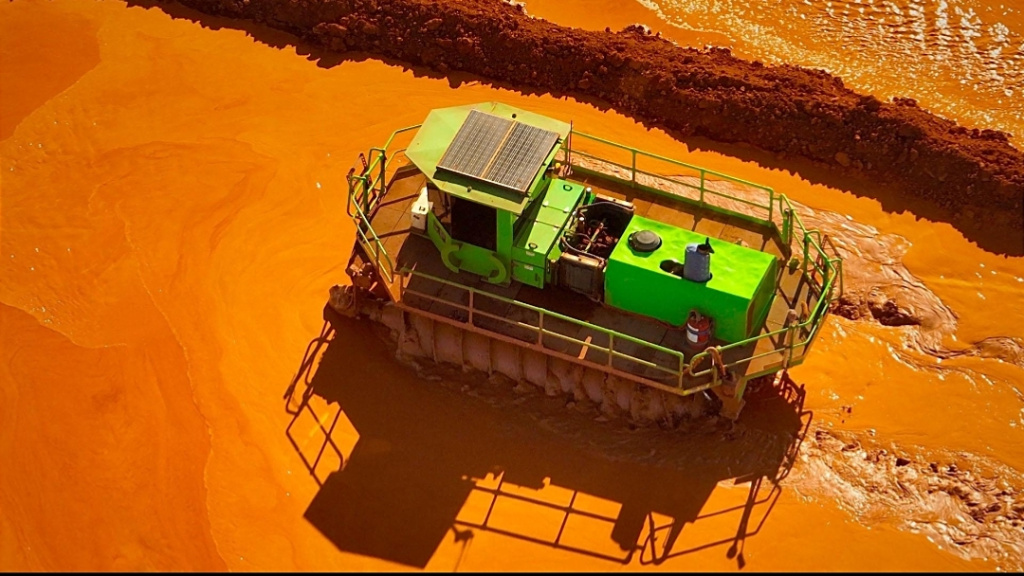
Photo: MudMaster with two large screw propulsion units – Phibion, Australia.
A large wheel works well on solid ground. Tracks significantly reduce ground pressure, allowing a vehicle to traverse terrain where a wheeled vehicle would begin to sink.
But what happens when the vehicle encounters a swamp, deep snow, quagmire, or open water?
That is precisely where the screw concept comes into play.
Instead of rolling over the surface, the screw literally bores into it, generating thrust.
The concept may look unusual, but the idea of the Archimedes' screw dates back centuries. Engineers eventually reasoned that if a screw could move water, a similar principle could be used to propel the vehicle itself.
Thus, a unique branch of all-terrain vehicle technology was born.
One of the most famous examples was the ZIL-4904—a massive screw-propelled all-terrain vehicle built in 1972.
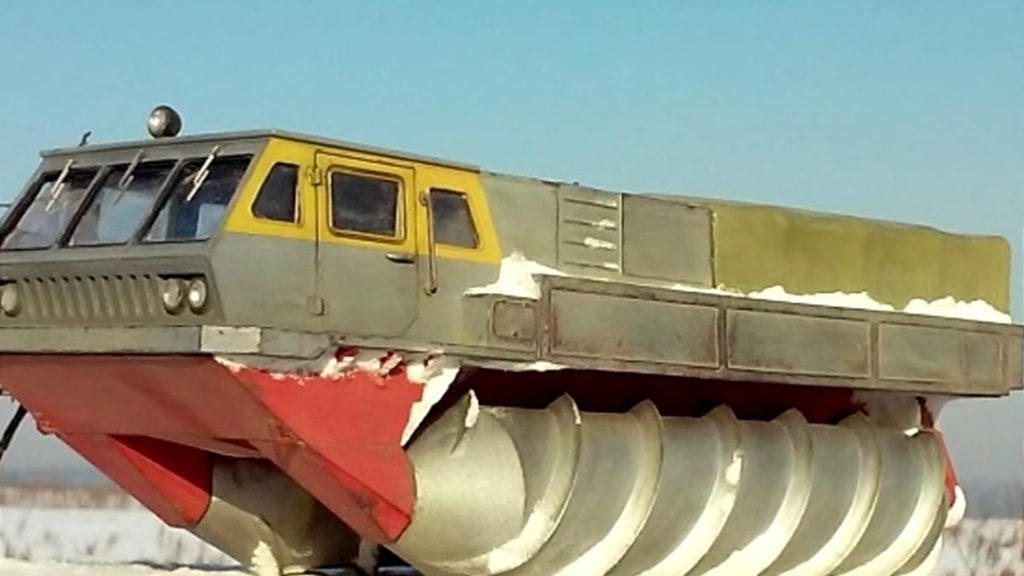
Screw-propelled vehicle – USSR, 1971
Although this vehicle was experimental, the concept behind it was far from a mere toy.
Soviet designers investigated the feasibility of traversing snow, marshland, soft soil, and water.
The experience gained from creating such vehicles was later applied to other specialized projects, including the famous ZIL-2906 family of search-and-recovery vehicles.
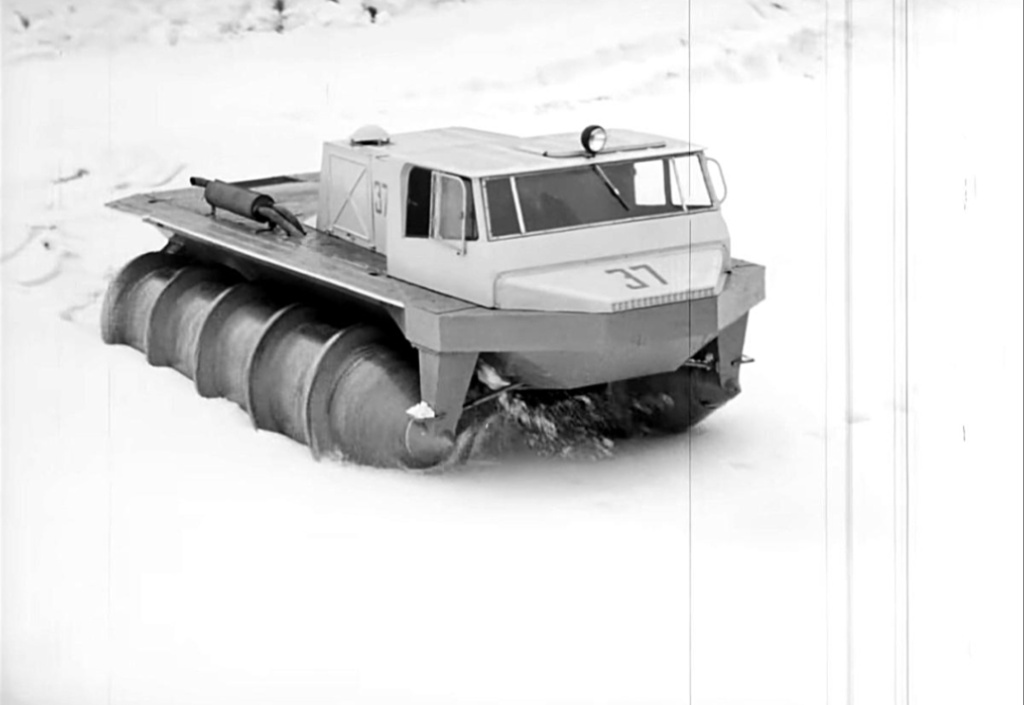
Screw-propelled vehicle – USSR, 1971
In short, screw-propelled vehicles in the USSR were neither a random experiment nor an attempt to build a "sci-fi movie machine."
They represented a serious engineering discipline.
This is particularly interesting given that Japanese engineering has traditionally placed great emphasis on robotics, amphibious vehicles, and machinery designed for challenging environments.
Today, the Japanese company Homura Heavy Industries is researching amphibious mobile robots designed to operate on sandy beaches, marshland, and snow.
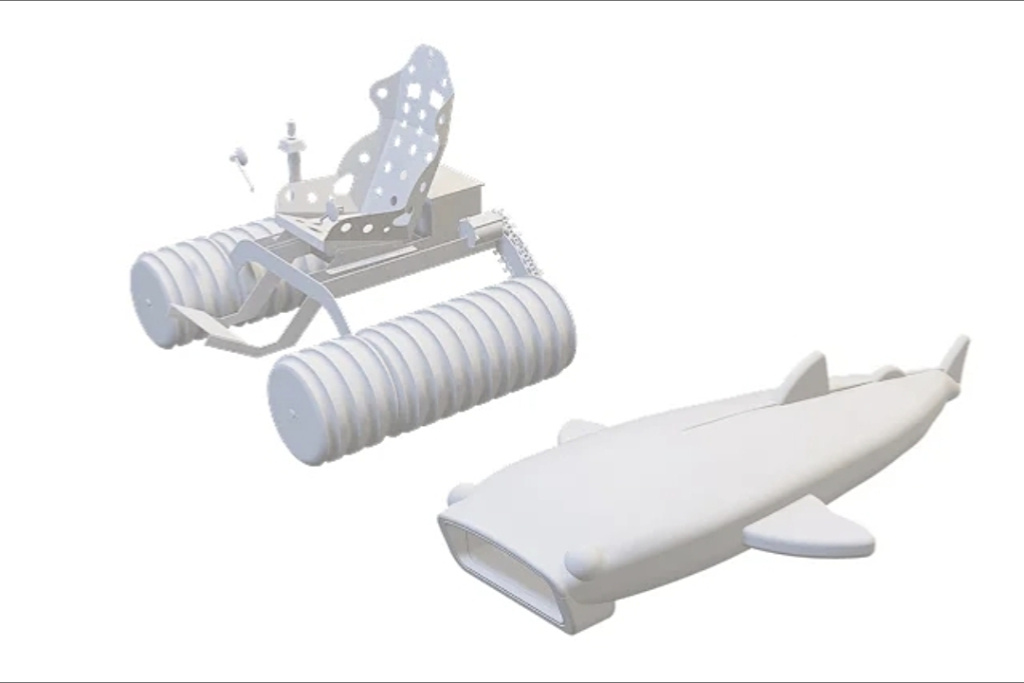
Screw-propelled robots – Japan, present day. Pictured: Amphibious mobile robots by Homura Heavy Industries (Japan)
Among the various propulsion options, Japanese engineers are actively considering the Archimedes' screw—the screw-propelled vehicle. In other words, the very principle that might make us instinctively exclaim "Meat grinder!" is viewed in Japan quite matter-of-factly as an engineering solution for traversing complex terrain.
But the story of Japanese screw-driven vehicles doesn't end there.
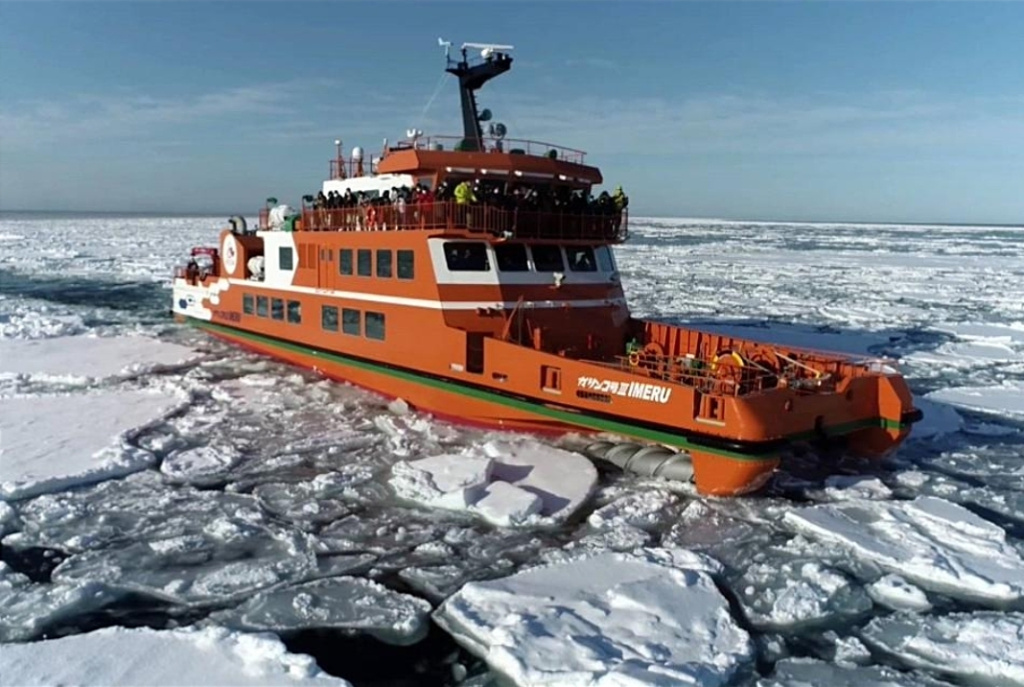
Their large screw-like propulsion units are designed for operation in icy waters and have become a distinctive feature of Japanese machinery built for northern seas.
Of course, the *Garinko* is neither a ZVM screw-propelled vehicle nor a swamp buggy.
Yet, the underlying engineering concept is related: the helical surface is used not merely for rotation, but to generate thrust in an environment where conventional propulsion systems face significant limitations.
The resulting picture is fascinating.
Soviet designers experimented with screw-propelled all-terrain vehicles.
Australians turned the screw propulsion system into an industrial tool.
The Japanese continue to explore Archimedes' screws for amphibious robotics and apply the screw principle to ice-going machinery.
And in Russia, this line of engineering saw a resurgence in the 21st century.
After the collapse of the USSR, this field of development was largely forgotten for many years.
However, the idea itself endured.
Today, similar principles can be observed in vastly different countries.
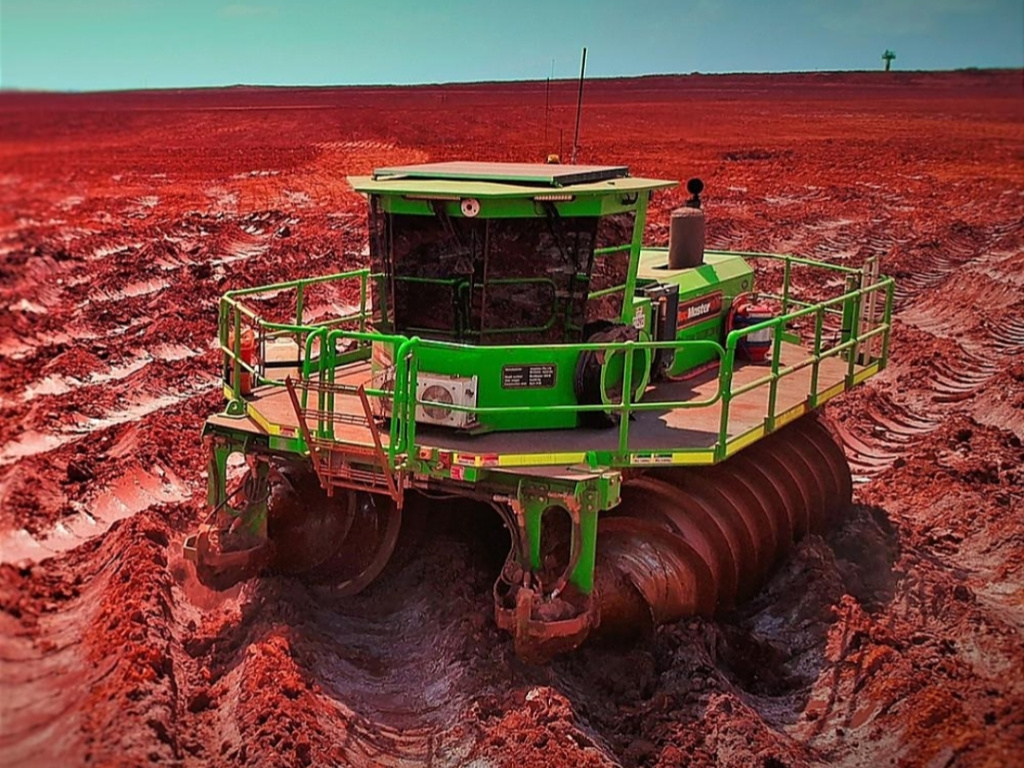
Photo: Phibion (Australia) – the MudMaster industrial machine featuring two large screw propulsion units.
For instance, the Australian company Phibion developed the MudMaster, an industrial machine equipped with two large screw propulsion units.
This is no longer just an experimental prototype from a design bureau.
The MudMaster is used for operations on extremely soft surfaces including at industrial tailings storage facilities.
The company notes that the machines are manufactured in Brisbane and used in international projects.
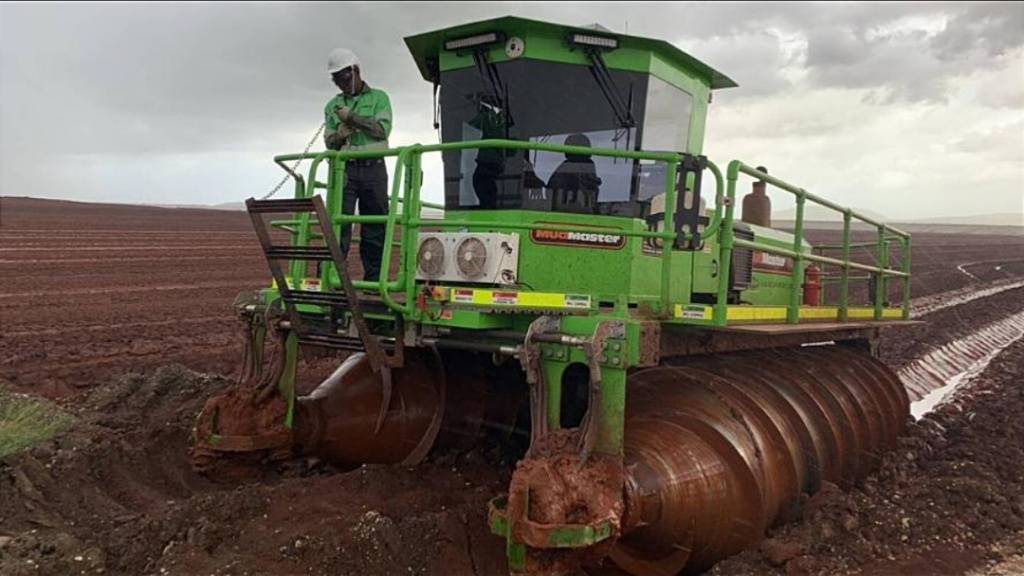
Photo: Phibion (Australia) – the MudMaster industrial machine featuring two large screw-type propulsion units.
In other words, the Archimedes' screw proved valuable not merely as an engineering experiment, but as a practical tool for addressing specific industrial challenges.
And this offers a good reason to view screw-propelled vehicles in a new light.
This is where our story begins.
In Nizhny Novgorod, the concept of rotary-screw all-terrain vehicles saw further development.
The All-Terrain Vehicle Plant (ZVM) collaborates with the R.E. Alekseev Nizhny Novgorod State Technical University (NSTU) and the "Transport Vehicles and Transport-Technological Complexes" research laboratory.
This school of engineering boasts a history spanning over half a century; the laboratory itself dates back to 1962.
Therefore, modern ZVM vehicles should not be viewed as a haphazard attempt to "invent a strange vehicle with screws."
Behind today's designs lies a continuation and reinterpretation of extensive engineering work initiated decades ago.
NSTU documentation explicitly highlights the connection between the ZVM-2901 and the large-scale development of rotary-screw vehicles conducted in the 1960s and 1970s.
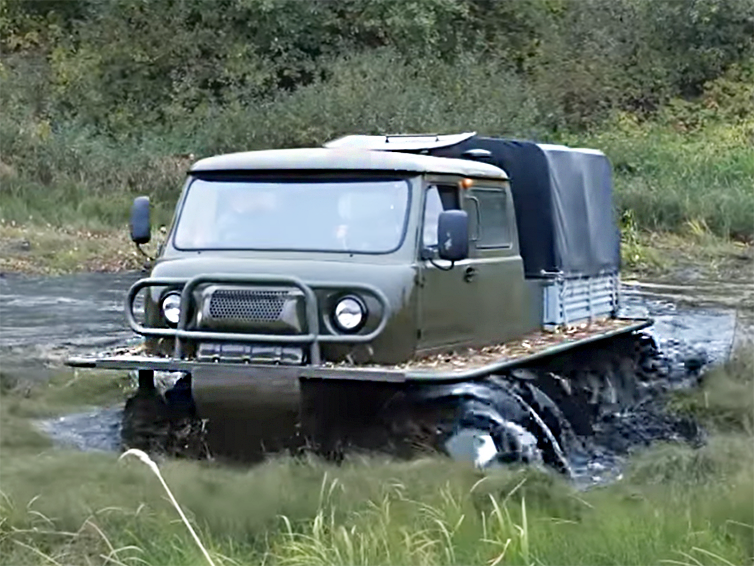
Photo: ZVM-2901 TTP all-terrain vehicle with rotary-screw propulsion.
And it is important to understand one thing here.
The ZVM-2901 was not created simply to make an unusual vehicle.
The objective was practical —
to provide the client with a vehicle capable of operating where the capabilities of conventional wheeled machinery are limited.
Swamps.
Marshy ground.
Unstable surfaces.
Deep snow.
Bodies of water.
Hard-to-reach areas.
It is precisely for such conditions that the screw-propulsion system is of interest.
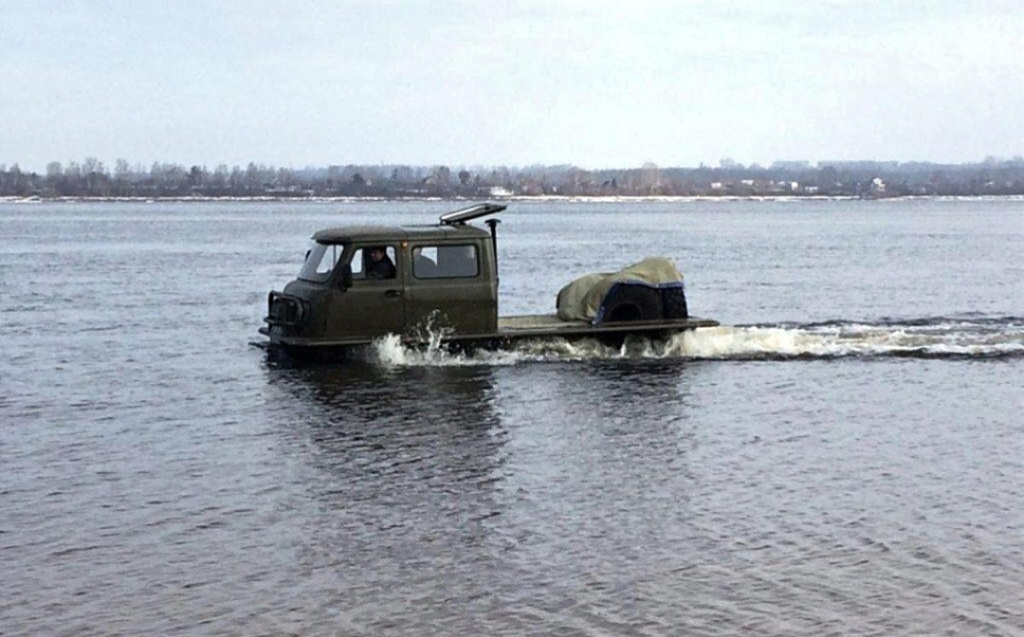
Photo: ZVM-2901 all-terrain vehicle with screw-propulsion system.
When a person first sees the huge metal screws, a perfectly natural thought arises:
"What if something gets caught in there?"
But the engineering logic behind the design is quite different.
The screw is not intended to shred anything.
It functions as a propulsion unit.
As it rotates, the screw interacts with the ground, snow, or water to generate thrust.
That is why the vehicle may appear somewhat aggressive, even though, in essence, it is simply another way of converting engine rotation into forward motion.
A screw-propelled all-terrain vehicle is by no means a universal replacement for a standard automobile or a tracked vehicle.
Nor is there any need for it to be.
Each design has its own specific application.
Wheeled vehicles perform excellently on roads and firm ground. A tracked vehicle can operate reliably across many types of off-road terrain.
However, a rotary-screw propulsion system is particularly advantageous where the ability to traverse very soft surfaces, buoyancy, and operation in specialized conditions are critical.
In other words, the question isn't:
"Which is better—wheels, tracks, or screws?"
The right question is:
"Which propulsion system is needed for my specific terrain and task?"
Viewed this way, the screw-propelled vehicle no longer seems strange.
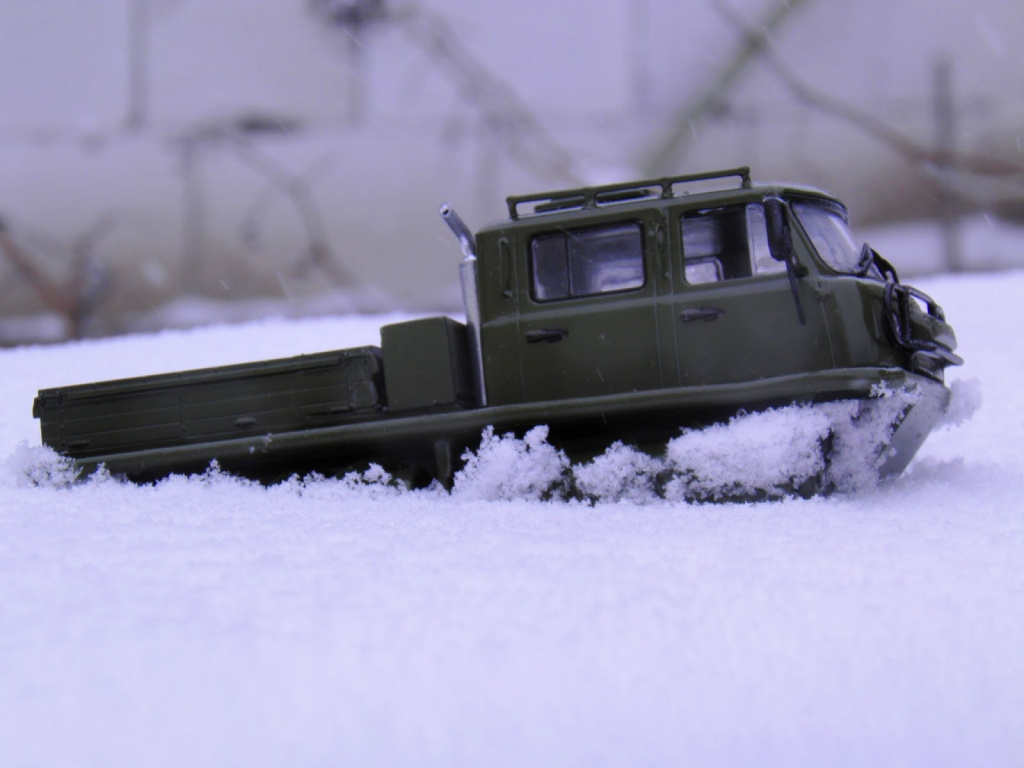
Photo: ZVM-2901 TTP all-terrain vehicle with rotary-screw propulsion.
Today, a client might need more than just a vehicle to transport a few people.
They might require a machine capable of simultaneously:
– transporting specialists;
– hauling cargo;
– delivering equipment;
– serving as an operational work platform;
– traveling between remote sites;
– traversing areas inaccessible to conventional vehicles.
That is precisely why modern ZVM models are being developed not merely as snow-and-swamp vehicles, but as transport and operational platforms.
For instance, the ZVM-2901 and the higher-capacity ZVM-2902 are designed for specialized transport and operational tasks.
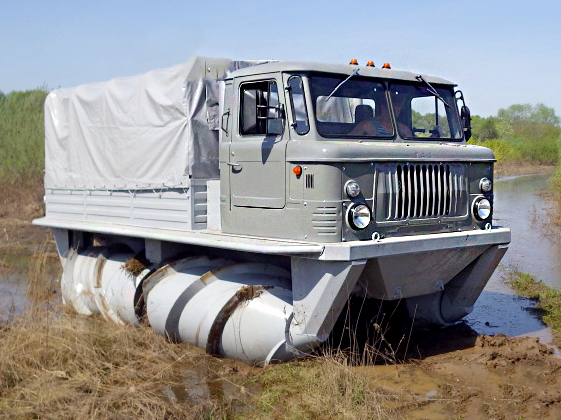
Photo: ZVM-2902 TTP all-terrain vehicle with rotary-screw propulsion.
This represents a completely different perspective on the screw-propelled vehicle.
It is not a "machine for the sake of a machine." It is a tool designed for a specific job.
If the terrain features swamps, unstable soil, deep snow, waterlogged industrial sites, or other difficult-to-traverse areas, the same engineering question arises:
how do you get people, equipment, and cargo there?
There are various possible answers.
However, the screw-propulsion system remains one of the options.
That is why similar ideas are emerging independently in different countries.
The USSR.
Russia.
Australia.
Japan.
And other countries facing challenging natural and industrial conditions.
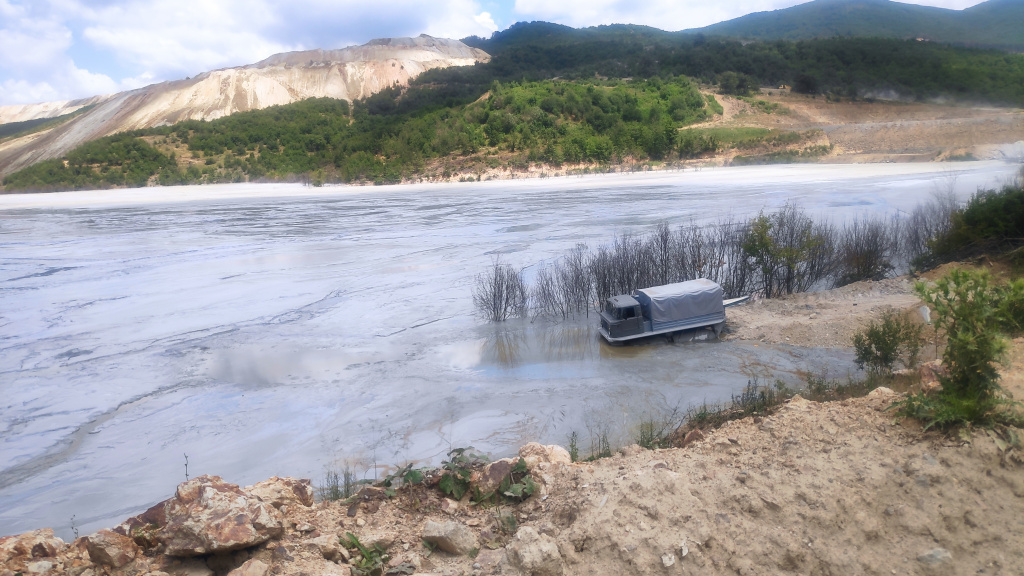
Photo: ZVM-2902 in operation at a complex industrial water site.
ZVM has a proven track record of supplying machinery to China; the manufacturer’s official channels have published details regarding the shipment of the ZVM-2901 model to China.
This is particularly interesting in an international context.
It presents a fascinating picture:
an engineering concept actively developed in the Soviet Union has seen a resurgence in Nizhny Novgorod—and a modern Russian vehicle is now operating abroad.
Because the world is once again taking a close look at specialized machinery.
Infrastructure continues to expand.
Industry is reaching remote areas.
Challenging terrains are being developed.
There is a growing need to transport personnel and equipment to locations where road construction is either impossible or economically unviable.
And here, it turns out that this old engineering concept is far from obsolete.
It has simply been updated with new materials, engines, control systems, and new applications.
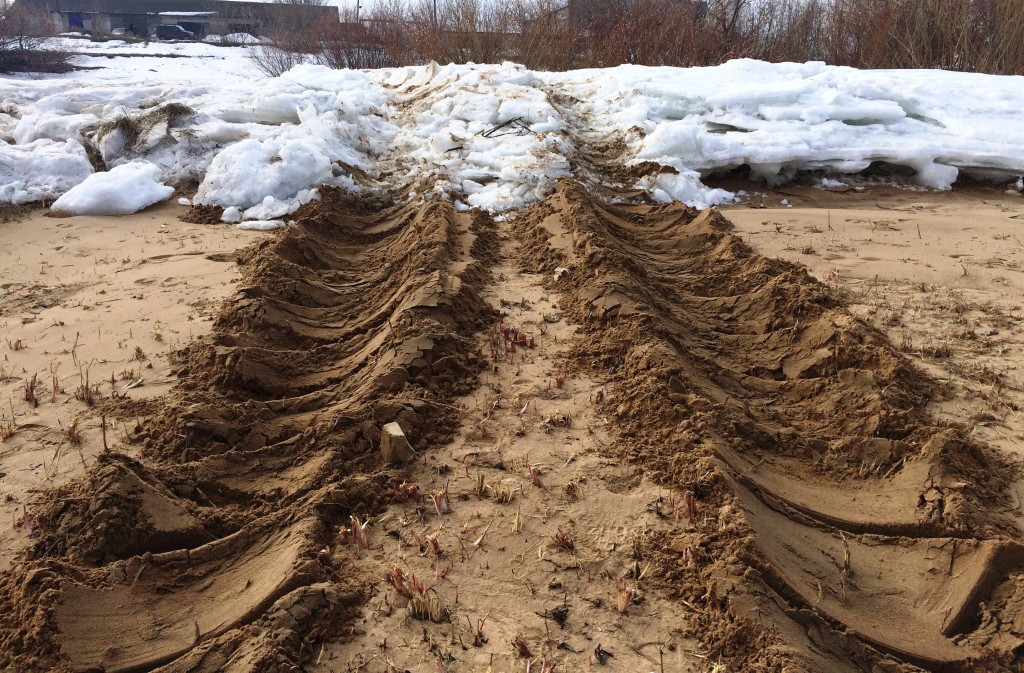
Photo: The path left by a screw-propelled vehicle.
Today, industrial MudMaster vehicles operate in Australia.
Japan is researching amphibious mobile robots and various types of propulsion systems.
Meanwhile, a modern school of screw-propulsion engineering is flourishing in Nizhny Novgorod.
So, the next time you see a vehicle with two massive screws, your first thought might no longer be:
"What kind of meat grinder is that?"
But rather:
"Interesting. Where exactly is a vehicle like that actually needed?"
Because sometimes, solving a complex problem doesn't mean improving the wheel.
Sometimes, you need to come up with a different way to move.
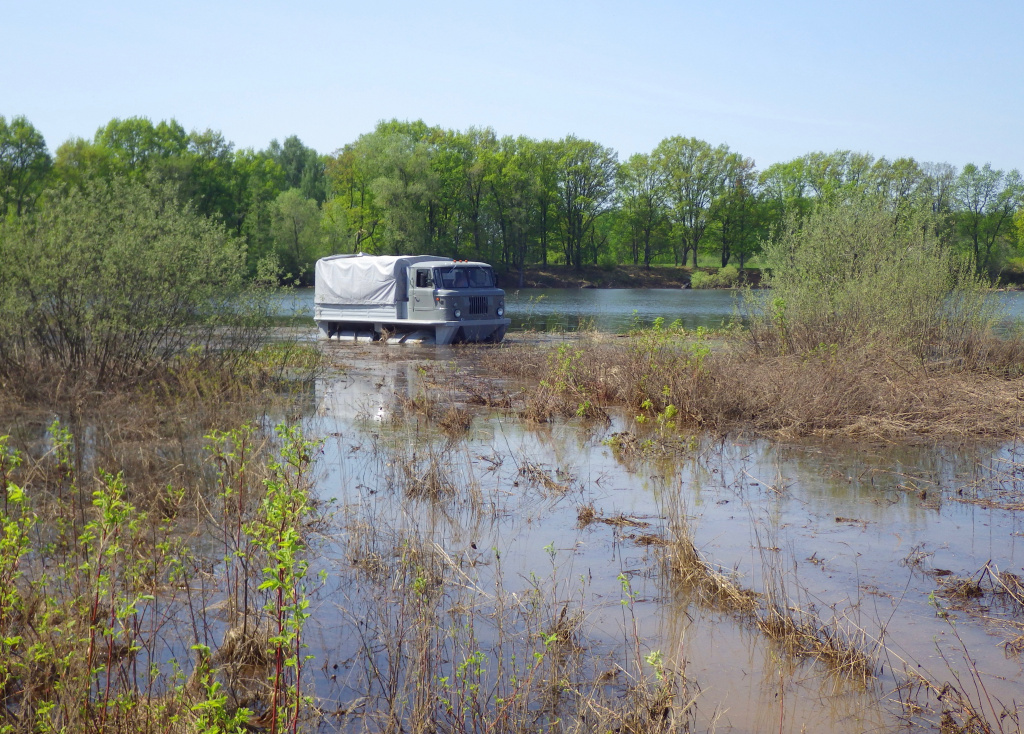
Photo: ZVM-2902 TTP all-terrain vehicle with a rotary-screw propulsion system.
Learn more about the models and capabilities:
ZVM rotary-screw all-terrain vehicles
The plant welcomes cooperation with international partners, including industrial companies, dealers, operators of specialized machinery, and end-users.
____________________________________
International cooperation:
Phone: +7 920 058-2840
E-mail: sales@zvm-nn.ruWhatsApp / Telegram: +7 920 058-2840
WeChat: wxid_dhdqihdmcn5w22
国际合作伙伴联系方式
俄罗斯全地形车辆制造厂(ZVM)欢迎与海外企业、经销商及最终客户开展合作。
电话:+7 920 058-2840
电子邮箱:sales@zvm-nn.ru
微信(WeChat):wxid_dhdqihdmcn5w22
Prepared by the Digital Communications Department of ZVM LLC (Zavod Vezdekhodnykh Mashin) — zvm-nn.ru
For inquiries regarding cooperation and the use of materials:
digital@zvm-nn.ru
6 September 2026
Screw-driven vehicles – screw-propelled machines. From Soviet designs to modern technology.
Imagine a vehicle that, instead of conventional wheels, has two huge screws.The first reaction of someone seeing this for the first time is usually something like:
"What kind of meat grinder is that?"
In reality, this is neither science fiction nor an engineering oddity.The rotary-screw—or auger—propulsion system represents a distinct branch of all-terrain vehicle technology that engineers across the globe have been researching and implementing for decades.
And the most interesting part is that such vehicles have been—and continue to be—built outside of Russia as well.
The Australian company Phibion created the MudMaster, an industrial vehicle featuring two large screw-type propulsion units.
Experiments with screw propulsion have taken place in various countries, from the Soviet Union to Japan and Australia.
Today, a dedicated school of rotary-screw vehicle engineering continues to develop in Nizhny Novgorod.
Photo: MudMaster with two large screw propulsion units – Phibion, Australia.
Where did the idea for a screw-driven vehicle come from in the first place?
The principle is quite simple.A large wheel works well on solid ground. Tracks significantly reduce ground pressure, allowing a vehicle to traverse terrain where a wheeled vehicle would begin to sink.
But what happens when the vehicle encounters a swamp, deep snow, quagmire, or open water?
That is precisely where the screw concept comes into play.
Instead of rolling over the surface, the screw literally bores into it, generating thrust.
The concept may look unusual, but the idea of the Archimedes' screw dates back centuries. Engineers eventually reasoned that if a screw could move water, a similar principle could be used to propel the vehicle itself.
Thus, a unique branch of all-terrain vehicle technology was born.
The Soviet Union: When Screw-Propelled Vehicles Became a Serious Engineering Challenge
In the USSR, research into screw-propulsion systems saw significant development during the second half of the 20th century.One of the most famous examples was the ZIL-4904—a massive screw-propelled all-terrain vehicle built in 1972.
Screw-propelled vehicle – USSR, 1971
Although this vehicle was experimental, the concept behind it was far from a mere toy.
Soviet designers investigated the feasibility of traversing snow, marshland, soft soil, and water.
The experience gained from creating such vehicles was later applied to other specialized projects, including the famous ZIL-2906 family of search-and-recovery vehicles.
Screw-propelled vehicle – USSR, 1971
In short, screw-propelled vehicles in the USSR were neither a random experiment nor an attempt to build a "sci-fi movie machine."
They represented a serious engineering discipline.
And what was happening in Japan?
Japan also explored the concept of screw propulsion.This is particularly interesting given that Japanese engineering has traditionally placed great emphasis on robotics, amphibious vehicles, and machinery designed for challenging environments.
Today, the Japanese company Homura Heavy Industries is researching amphibious mobile robots designed to operate on sandy beaches, marshland, and snow.
Screw-propelled robots – Japan, present day. Pictured: Amphibious mobile robots by Homura Heavy Industries (Japan)
Among the various propulsion options, Japanese engineers are actively considering the Archimedes' screw—the screw-propelled vehicle. In other words, the very principle that might make us instinctively exclaim "Meat grinder!" is viewed in Japan quite matter-of-factly as an engineering solution for traversing complex terrain.
But the story of Japanese screw-driven vehicles doesn't end there.
A notable chapter in this story involves the famous *Garinko* ice-going vessels. *Garinko* ice-going vessels
Their large screw-like propulsion units are designed for operation in icy waters and have become a distinctive feature of Japanese machinery built for northern seas.
Of course, the *Garinko* is neither a ZVM screw-propelled vehicle nor a swamp buggy.
Yet, the underlying engineering concept is related: the helical surface is used not merely for rotation, but to generate thrust in an environment where conventional propulsion systems face significant limitations.
The resulting picture is fascinating.
Soviet designers experimented with screw-propelled all-terrain vehicles.
Australians turned the screw propulsion system into an industrial tool.
The Japanese continue to explore Archimedes' screws for amphibious robotics and apply the screw principle to ice-going machinery.
And in Russia, this line of engineering saw a resurgence in the 21st century.
But the most interesting part is that screw propulsion never disappeared.
After the collapse of the USSR, this field of development was largely forgotten for many years.
However, the idea itself endured.
Today, similar principles can be observed in vastly different countries.
Photo: Phibion (Australia) – the MudMaster industrial machine featuring two large screw propulsion units.
For instance, the Australian company Phibion developed the MudMaster, an industrial machine equipped with two large screw propulsion units.
This is no longer just an experimental prototype from a design bureau.
The MudMaster is used for operations on extremely soft surfaces including at industrial tailings storage facilities.
The company notes that the machines are manufactured in Brisbane and used in international projects.
Photo: Phibion (Australia) – the MudMaster industrial machine featuring two large screw-type propulsion units.
In other words, the Archimedes' screw proved valuable not merely as an engineering experiment, but as a practical tool for addressing specific industrial challenges.
And this offers a good reason to view screw-propelled vehicles in a new light.
And now—Nizhny Novgorod.
This is where our story begins.
In Nizhny Novgorod, the concept of rotary-screw all-terrain vehicles saw further development.
The All-Terrain Vehicle Plant (ZVM) collaborates with the R.E. Alekseev Nizhny Novgorod State Technical University (NSTU) and the "Transport Vehicles and Transport-Technological Complexes" research laboratory.
This school of engineering boasts a history spanning over half a century; the laboratory itself dates back to 1962.
Therefore, modern ZVM vehicles should not be viewed as a haphazard attempt to "invent a strange vehicle with screws."
Behind today's designs lies a continuation and reinterpretation of extensive engineering work initiated decades ago.
NSTU documentation explicitly highlights the connection between the ZVM-2901 and the large-scale development of rotary-screw vehicles conducted in the 1960s and 1970s.
Photo: ZVM-2901 TTP all-terrain vehicle with rotary-screw propulsion.
ZVM-2901 — The return of screw-propelled vehicles to modern machinery.
In 2019, ZVM announced trials of a snow-and-swamp vehicle featuring rotary-screw propulsion. The ZVM-2901 was one of the first modern vehicles of this type.And it is important to understand one thing here.
The ZVM-2901 was not created simply to make an unusual vehicle.
The objective was practical —
to provide the client with a vehicle capable of operating where the capabilities of conventional wheeled machinery are limited.
Swamps.
Marshy ground.
Unstable surfaces.
Deep snow.
Bodies of water.
Hard-to-reach areas.
It is precisely for such conditions that the screw-propulsion system is of interest.
Photo: ZVM-2901 all-terrain vehicle with screw-propulsion system.
Why the screw looks more menacing than it actually is
There is an interesting quirk about screw-propelled vehicles.When a person first sees the huge metal screws, a perfectly natural thought arises:
"What if something gets caught in there?"
But the engineering logic behind the design is quite different.
The screw is not intended to shred anything.
It functions as a propulsion unit.
As it rotates, the screw interacts with the ground, snow, or water to generate thrust.
That is why the vehicle may appear somewhat aggressive, even though, in essence, it is simply another way of converting engine rotation into forward motion.
Why do we need a screw-propelled vehicle at all when conventional all-terrain vehicles exist?
This is where the most important point comes in.A screw-propelled all-terrain vehicle is by no means a universal replacement for a standard automobile or a tracked vehicle.
Nor is there any need for it to be.
Each design has its own specific application.
Wheeled vehicles perform excellently on roads and firm ground. A tracked vehicle can operate reliably across many types of off-road terrain.
However, a rotary-screw propulsion system is particularly advantageous where the ability to traverse very soft surfaces, buoyancy, and operation in specialized conditions are critical.
In other words, the question isn't:
"Which is better—wheels, tracks, or screws?"
The right question is:
"Which propulsion system is needed for my specific terrain and task?"
Viewed this way, the screw-propelled vehicle no longer seems strange.
Photo: ZVM-2901 TTP all-terrain vehicle with rotary-screw propulsion.
From all-terrain vehicle to work platform
The modern approach to these machines has also evolved.Today, a client might need more than just a vehicle to transport a few people.
They might require a machine capable of simultaneously:
– transporting specialists;
– hauling cargo;
– delivering equipment;
– serving as an operational work platform;
– traveling between remote sites;
– traversing areas inaccessible to conventional vehicles.
That is precisely why modern ZVM models are being developed not merely as snow-and-swamp vehicles, but as transport and operational platforms.
For instance, the ZVM-2901 and the higher-capacity ZVM-2902 are designed for specialized transport and operational tasks.
Photo: ZVM-2902 TTP all-terrain vehicle with rotary-screw propulsion.
This represents a completely different perspective on the screw-propelled vehicle.
It is not a "machine for the sake of a machine." It is a tool designed for a specific job.
And this is where the international story begins
Interest in this type of machinery is only natural.If the terrain features swamps, unstable soil, deep snow, waterlogged industrial sites, or other difficult-to-traverse areas, the same engineering question arises:
how do you get people, equipment, and cargo there?
There are various possible answers.
However, the screw-propulsion system remains one of the options.
That is why similar ideas are emerging independently in different countries.
The USSR.
Russia.
Australia.
Japan.
And other countries facing challenging natural and industrial conditions.
Photo: ZVM-2902 in operation at a complex industrial water site.
Russia and China.
Interest in Russian screw-propelled vehicles has already extended beyond the domestic market.ZVM has a proven track record of supplying machinery to China; the manufacturer’s official channels have published details regarding the shipment of the ZVM-2901 model to China.
This is particularly interesting in an international context.
It presents a fascinating picture:
an engineering concept actively developed in the Soviet Union has seen a resurgence in Nizhny Novgorod—and a modern Russian vehicle is now operating abroad.
Why is this story significant right now?
Because the world is once again taking a close look at specialized machinery.
Infrastructure continues to expand.
Industry is reaching remote areas.
Challenging terrains are being developed.
There is a growing need to transport personnel and equipment to locations where road construction is either impossible or economically unviable.
And here, it turns out that this old engineering concept is far from obsolete.
It has simply been updated with new materials, engines, control systems, and new applications.
Photo: The path left by a screw-propelled vehicle.
The screw-propelled vehicle is not a thing of the past; it represents a distinct avenue for the future.
ZIL once built massive experimental vehicles.Today, industrial MudMaster vehicles operate in Australia.
Japan is researching amphibious mobile robots and various types of propulsion systems.
Meanwhile, a modern school of screw-propulsion engineering is flourishing in Nizhny Novgorod.
So, the next time you see a vehicle with two massive screws, your first thought might no longer be:
"What kind of meat grinder is that?"
But rather:
"Interesting. Where exactly is a vehicle like that actually needed?"
Because sometimes, solving a complex problem doesn't mean improving the wheel.
Sometimes, you need to come up with a different way to move.
Photo: ZVM-2902 TTP all-terrain vehicle with a rotary-screw propulsion system.
ZVM — rotary-screw vehicles for specialized operating conditions
Today, the All-Terrain Vehicle Plant (ZVM) offers modern vehicles featuring rotary-screw propulsion for transport and specialized operational tasks.Learn more about the models and capabilities:
ZVM rotary-screw all-terrain vehicles
The plant welcomes cooperation with international partners, including industrial companies, dealers, operators of specialized machinery, and end-users.
____________________________________
International cooperation:
Phone: +7 920 058-2840
E-mail: sales@zvm-nn.ruWhatsApp / Telegram: +7 920 058-2840
WeChat: wxid_dhdqihdmcn5w22
国际合作伙伴联系方式
俄罗斯全地形车辆制造厂(ZVM)欢迎与海外企业、经销商及最终客户开展合作。
电话:+7 920 058-2840
电子邮箱:sales@zvm-nn.ru
微信(WeChat):wxid_dhdqihdmcn5w22
If your mission begins where the ordinary road ends— perhaps it is time to look at it from a different perspective.
Prepared by the Digital Communications Department of ZVM LLC (Zavod Vezdekhodnykh Mashin) — zvm-nn.ru
For inquiries regarding cooperation and the use of materials:
digital@zvm-nn.ru