

1 September 2026
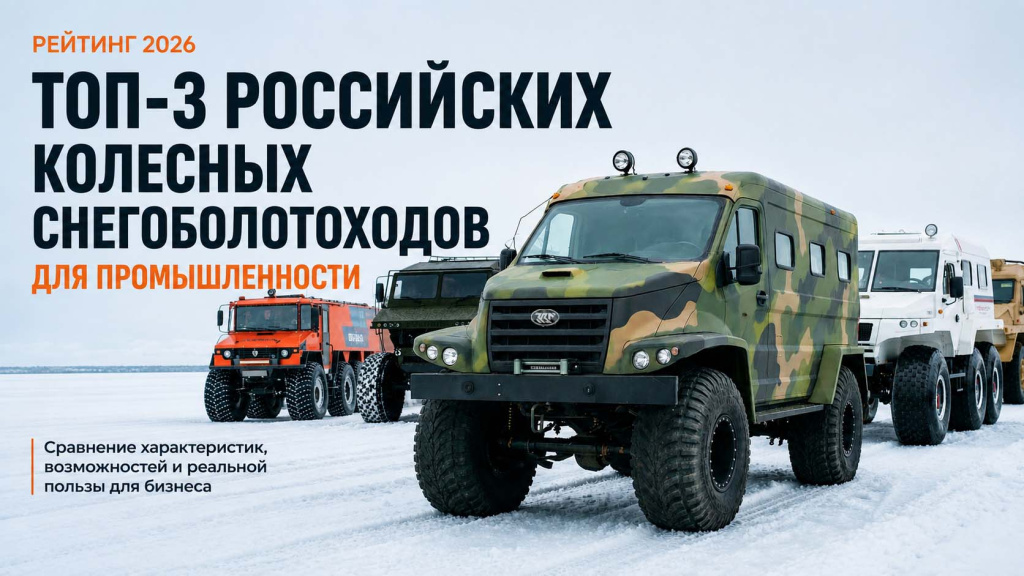
Top 3 Russian wheeled all-terrain vehicles: which ones are truly ready for industrial work today?
Introduction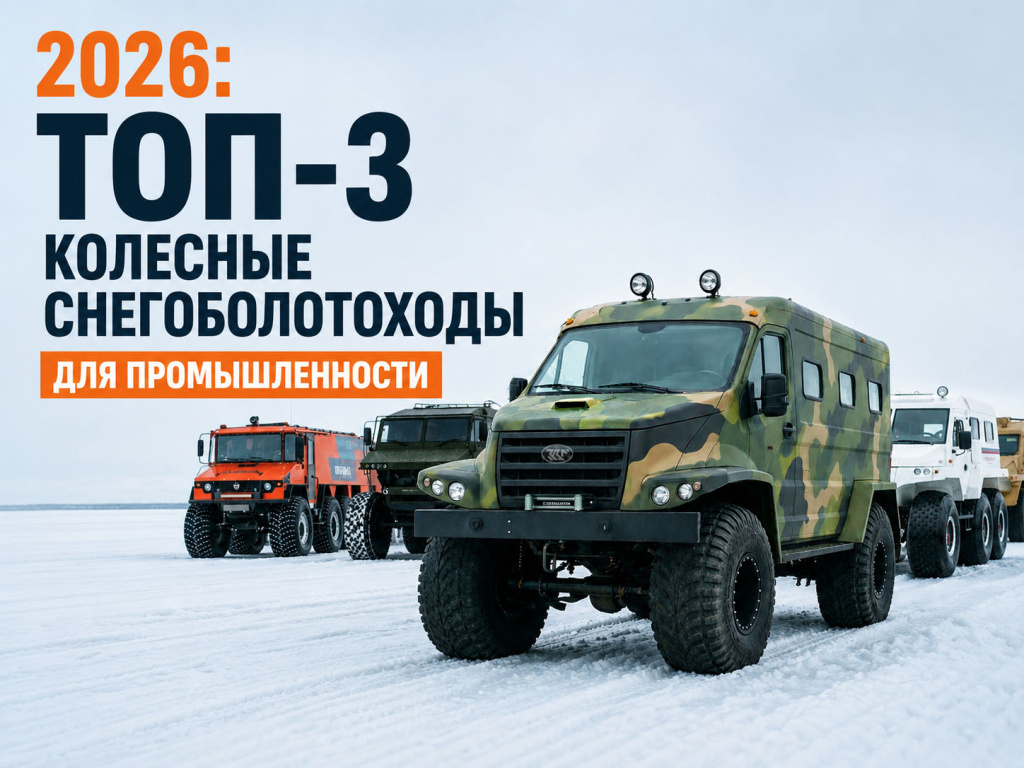
The Russian market for all-terrain vehicles (ATVs) has long since ceased to be the exclusive domain of heavy tracked machines.
Where, until recently, an MT-LB or an articulated tracked transporter was required, wheeled all-terrain vehicles are now increasingly being used—offering greater speed, lower operating costs, and easier maintenance.See also – 2026 General Ranking: Top 15 Industrial ATVs for the North, Swamps, and Off-Road Terrain
But which of them truly deserve the title of "industrial-grade"?
We selected these vehicles based not on brand recognition or impressive specifications from promotional brochures. The evaluation took into account load capacity, performance on soft terrain, ground pressure, fuel consumption, operating range, speed, amphibious capability, cost, configuration options, service support, and—most importantly—actual market presence within the industrial and competitive procurement landscape of Russia and its immediate neighbor, Kazakhstan.
As a result, our top three list includes the following all-terrain vehicles:
1. "Burlak" 6×6 (Manufacturer: Vezdekhody Burlak LLC)
2. "Khishchnik" (Manufacturer: MEG VEST LLC)
3. ZVM "Veya" 4×4 (Manufacturer: Zavod Vezdekhodnykh Mashin LLC)
— and these represent three completely different approaches to the same task
Why are wheeled all-terrain vehicles needed in the first place?
Heavy tracked all-terrain vehicles have an obvious advantage: they can transport multi-ton loads far beyond the end of any conventional road.
But this capability comes at a price.
High weight, complex running gear, high fuel consumption, and costly logistics and maintenance make a heavy tracked vehicle overkill when the task is not to transport 10 tons of equipment, but rather a small crew, tools, spare parts, or a modest load.
This is precisely where the domain of the wheeled all-terrain vehicle begins.
Its mission is slightly different:
to rapidly transport personnel and cargo to locations inaccessible to standard vehicles, yet where deploying a heavy tracked transporter is not economically justified.
This offers a crucial advantage for sectors such as oil and gas, geology, energy, forestry, telecommunications, emergency services, and linear infrastructure maintenance.
How we selected the top three
We deliberately avoided ranking them based on a single metric.
Top speed alone reveals nothing about off-road capability. Payload capacity means little without considering ground pressure. And a low purchase price can translate into high operating costs.
Therefore, we evaluated several groups of parameters.
Technical specifications
- payload capacity;
- load capacity on soft ground;
- ground pressure;
- speed;
- speed while afloat;
- buoyancy;
- operating range;
- fuel consumption;
- tire size and type;
- capacity.
Industrial suitability
- cargo platform;
- truck-mounted crane;
- drilling rig;
- living module;
- specialized equipment;
- adaptability to customer specifications.
Economics
- price of a new vehicle;
- availability on the secondary market;
- fuel consumption;
- maintenance costs;
- spare parts availability;
- repairability.
Market
We paid special attention to procurement.
We considered not only government tenders under Federal Law No. 44-FZ but also competitive procurement under Federal Law No. 223-FZ, corporate procurement, and the Kazakhstan market—specifically government and quasi-government procurement.
Why does this matter? —
Because a vehicle that has actually been delivered is far more interesting than one that exists only in a catalog.
So, here is our top three
No. 3. ZVM "Veya" 4×4 — a compact workhorse
We award third place to the "Veya" 4×4.
And this is a case where a small vehicle can prove far more useful than a large one.
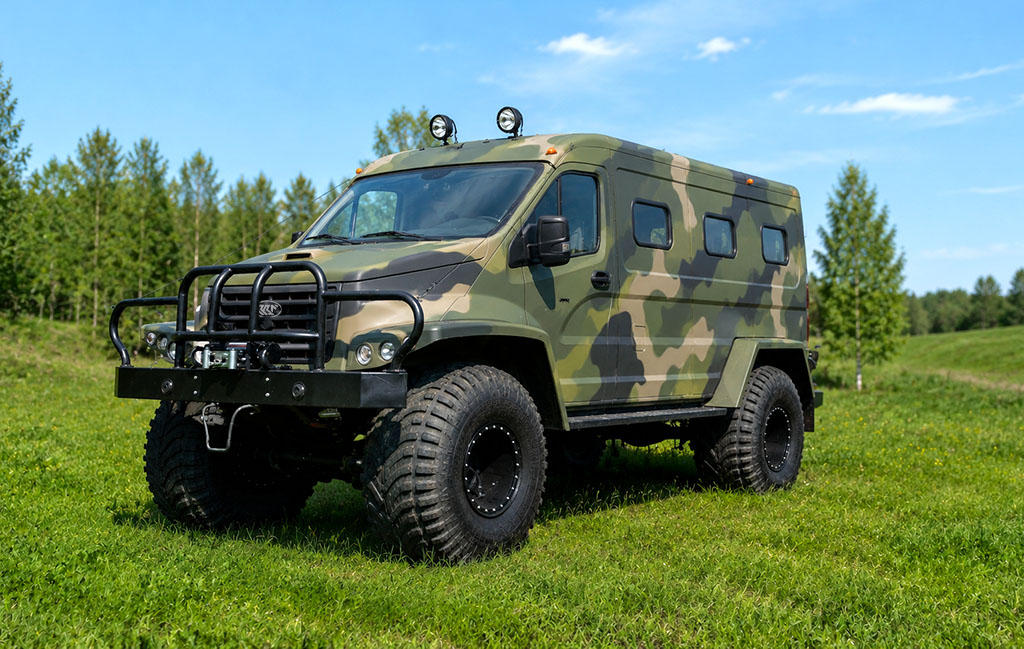 ZVM "Veya" 4x4 and 6x6 all-terrain vehicles. The "Veya's" main advantage isn't its raw specifications.
Depending on the configuration, the "Veya" is designed to transport several people and cargo while maintaining relatively compact dimensions and a simple wheel layout.
For the 4×4 model, the manufacturer specifies a payload capacity of up to 700 kg on firm ground and up to 500 kg on soft, low-bearing-capacity terrain or while afloat. Different tire types and layouts are used depending on the specific version.
The "Veya's" main advantage isn't its raw specifications.
It offers fuel efficiency and capable off-road performance in a compact package.
Such a vehicle is easier to transport to the work site, easier to maintain, and easier to use in locations where a heavy all-terrain vehicle would simply be impractical.
Where it is particularly useful:
- geological survey teams;
- linear infrastructure projects;
- telecommunications;
- forestry;
- small repair crews;
- the energy sector;
- transporting personnel and tools.
There is also another factor here—one rarely found in magazine rankings.
Procurement practices.
For industrial assessment, what matters isn't just technical documentation, but the vehicle's ability to qualify for competitive procurement contracts. That is precisely why we view the "Veya" as a full-fledged industrial platform rather than a recreational all-terrain vehicle.
The main advantage —
Minimal excess capacity.
If a company needs to transport a few people and a few hundred kilograms of equipment, buying a five-ton transporter simply makes no sense.
The main disadvantage —
Limited payload capacity.
When the task involves loads measured in tons, the "Veya" quickly falls outside its weight class.
However, the 4x4 "Veya" has a "big brother": the 6x6 "Veya" all-terrain vehicle. Variants in this series are produced with low-pressure tires in 1300x700 and 1680x700 sizes, offering a payload capacity of up to 2,000 kg (on firm ground). We are not including them in our top three right now, however, as these "relatives" have not seen as much active deployment as the 4x4 "Veya." They did not make the ranked list, yet they are among the best industrial-grade Russian all-terrain vehicles (ATVs) of 2026.
No. 2: "Khishchnik"
— a vehicle with proven market demand
We place the "Khishchnik" in second place. What matters most to us here is not just the vehicle itself, but also its market performance.
The "Khishchnik" has long since moved beyond the niche of specialized expeditionary vehicles.
It is used in northern regions, within municipal and industrial infrastructure, and for transporting personnel and equipment.
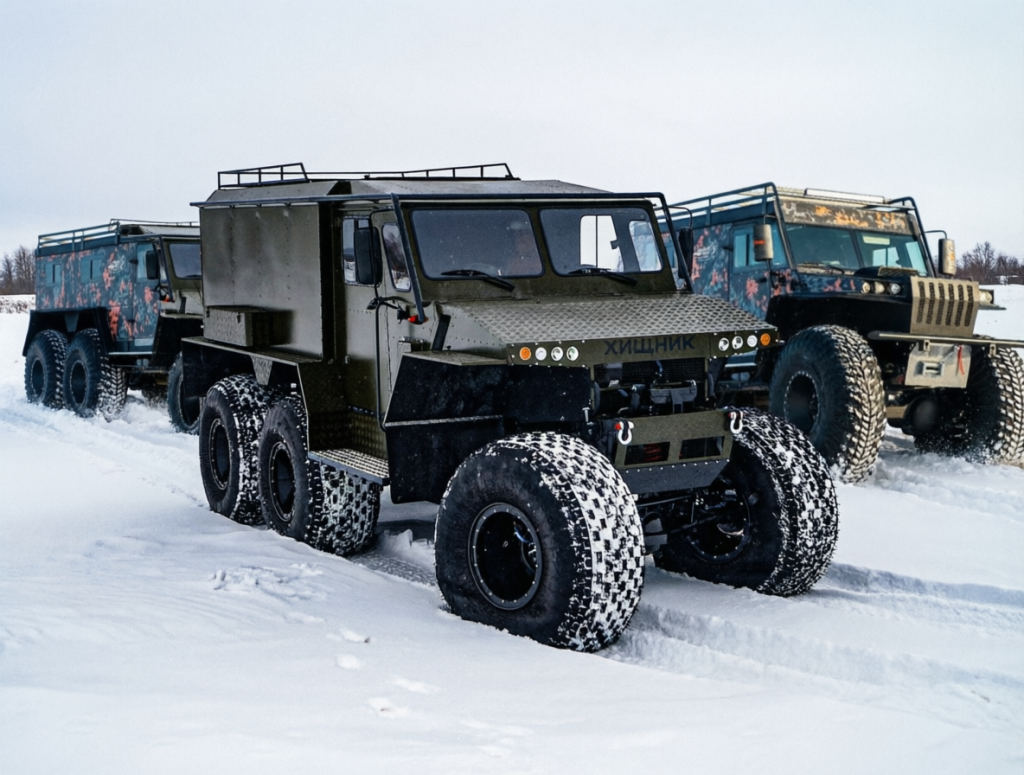 The "Khishchnik" is most in demand where standard wheeled vehicles can no longer cope, yet heavy tracked transport is not yet economically justified.
And most importantly for our study, the vehicle appears in procurement documentation.
In 2026, for instance, procurement records in Kazakhstan and Russia show orders for the ATV itself, as well as for tires, spare parts, and components for various "Khishchnik" models.
This represents a completely different level of proof regarding market demand.
One can debate specifications.
But when a company buys a vehicle, then tires, then spare parts, and later acquires more units of the same model, we are no longer looking at a mere promotional product.
We are looking at an active industrial fleet.
Why the "Khishchnik" ranked higher than the "Veya"
The main reason is scale.
The "Khishchnik" offers significantly more configuration and payload options and is capable of operating as a standalone transport platform.
It is particularly attractive in situations where standard wheeled off-road vehicles can no longer cope, yet heavy tracked transport is not yet economically justified.
We consider this specific niche to be one of the most promising in the Russian market.
Key advantage
A proven operational track record.
The vehicle has not only technical specifications but also an established market for secondary purchases, components, and maintenance.
Key disadvantage
Limited payload capacity.
When the task involves loads measured in tons, the "Veya" quickly exceeds its weight class.
However, the 4x4 "Veya" has a big brother: the "Veya" 6x6 all-terrain vehicle. Variants in this line are produced with low-pressure tires in sizes 1300x700 and 1680x700, offering a payload capacity of up to 2,000 kg (on firm ground). We have not included them in the top three right now because these "relatives" have not demonstrated the same level of activity as the 4x4 "Veya." They fall outside the ranked list, yet they remain among the best industrial-grade Russian all-terrain vehicles of 2026.
No. 2. "Khishchnik"
— a vehicle that has proven its market demand
We place the "Khishchnik" in second place. In this case, what matters to us is not just the vehicle itself, but also its market performance.
The "Khishchnik" has long since moved beyond the realm of purely expeditionary vehicles.
It is used in northern regions, within municipal and industrial infrastructure, and for transporting personnel and equipment.
The "Khishchnik" is in highest demand where standard wheeled vehicles can no longer cope, yet heavy tracked transport is not yet economically justified.And most importantly for our study, the vehicle appears in procurement documentation.
For instance, in 2026, procurement records in Kazakhstan and Russia show purchases of the all-terrain vehicle itself, as well as tires, spare parts, and components for various "Khishchnik" models.
This represents a completely different level of proof regarding market demand.
One can debate technical specifications.
But when a company first buys the vehicle, then tires, then spare parts, and later acquires more units of the same model, we are no longer looking at a mere promotional product.
We are looking at an active industrial fleet.
Why the "Khishchnik" ranked higher than the "Veya"
The main reason is scale.
The "Khishchnik" offers significantly more configuration and payload options and is capable of operating as a standalone transport platform.
It is particularly interesting for situations where standard wheeled off-road vehicles can no longer cope, yet heavy tracked transport is not yet economically justified.
We consider this specific niche to be one of the most promising in the Russian market.
Key advantage
A proven operational track record.
The vehicle has not only technical specifications but also an established market for resale, spare parts, and maintenance.
Key disadvantage
Operating costs and complexity are higher than those of compact wheeled vehicles.
Furthermore, when selecting a specific model, it is essential to carefully consider the engine, tires, load capacity, and intended use. A single model name can cover vehicles with vastly different specifications.
No. 1. Burlak 6×6 — the best industrial balance
We award first place to the Burlak 6×6.
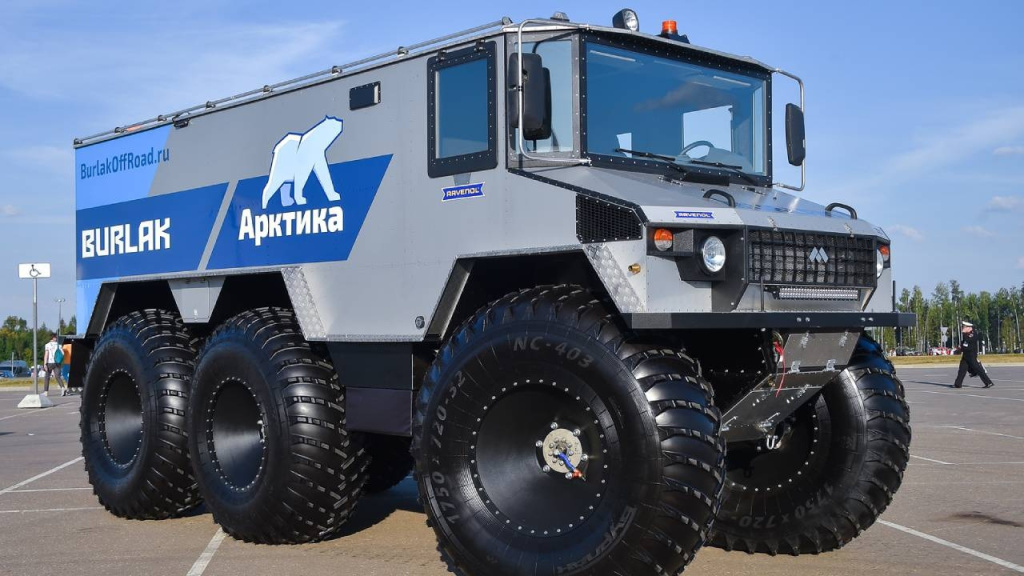 The Burlak 6×6 snow and swamp vehicle — the best industrial balance of 2026.
The word "balance" best explains our choice.
The Burlak does not attempt to compete with the DT-10 in terms of payload capacity.
It does not try to replace the heavy tracked transporter.
Its strength lies elsewhere:
it fills a massive industrial niche between a standard vehicle and a heavy snow and swamp vehicle.
For the cargo-passenger version, the claimed capacity is up to 3 tons on firm ground and up to 1.5 tons on soft ground or while afloat.
Ground pressure is approximately 0.12 kgf/cm².
This is a crucial figure.
It demonstrates why a wheeled all-terrain vehicle can actually compete with tracked machinery.
At the same time, the vehicle maintains a high road speed—up to 70 km/h.
And this is where a fundamental advantage emerges.
The Burlak can be quickly redeployed between sites. There is no need to organize the complex transport of a heavy tracked vehicle for every move. For companies servicing geographically dispersed sites, this translates into massive cost savings.
The Burlak as a technology platform
Another argument in favor of the top spot is the available equipment options.
Various specialized versions based on the Burlak are available, including vehicles equipped with truck-mounted cranes and drilling rigs.
That is, we are not just talking about an all-terrain vehicle for transporting people.
The car can turn into a workplace.
And this is precisely what is often more important for an industrial customer than an extra ton of carrying capacity.
Why didn’t we put “Shaman” in first place
“Shaman” is one of the most famous Russian wheeled off-road vehicles.
But fame should not automatically translate into first place.
More important for our rating:
industrial applicability + cargo efficiency + economics + purchasing demand.
“Shaman” shows itself perfectly as an extreme all-terrain vehicle.
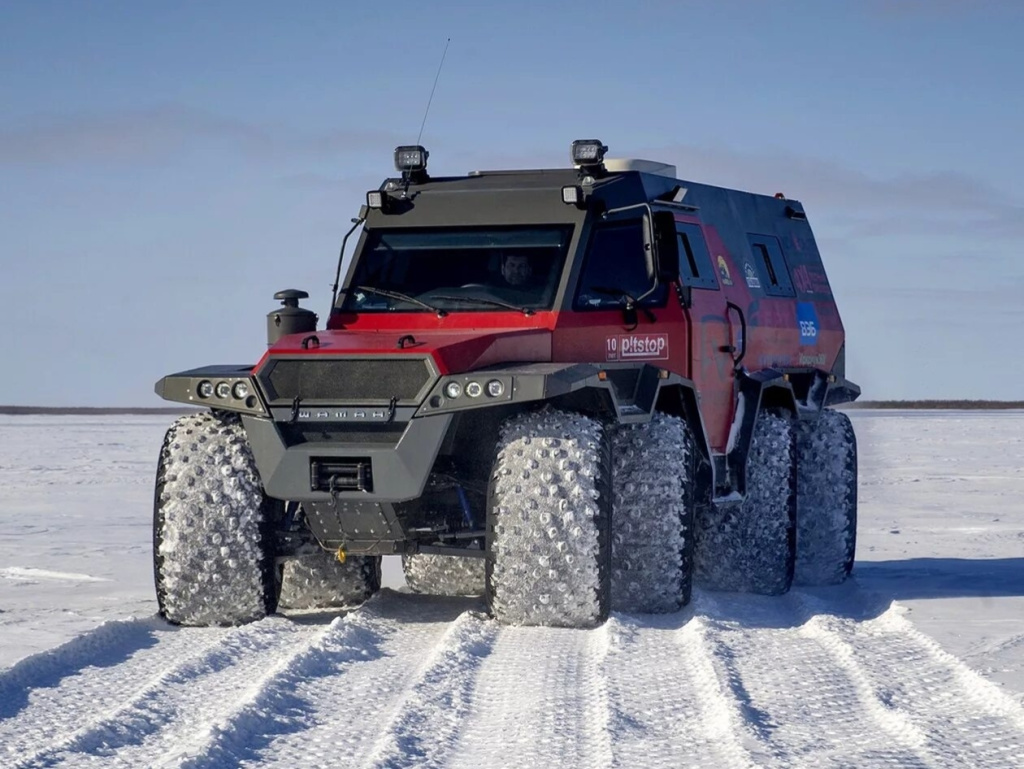 The Shaman snow and swamp vehicle is one of the most famous Russian wheeled off-road vehicles
But industrial customers do not always need extreme cross-country ability in itself.
If the task is to deliver a three-ton cargo to a remote site, transport a crew with equipment, or install a drilling complex, the rating begins to look different.
Therefore, “Shaman” remains an important participant in the Russian market, but in our industrial TOP-3 it is inferior to more utilitarian solutions.
Where is TREKOL?
We do not deliberately exclude TRECOL from the study.
On the contrary, it is one of the largest and most mature players in the Russian market.
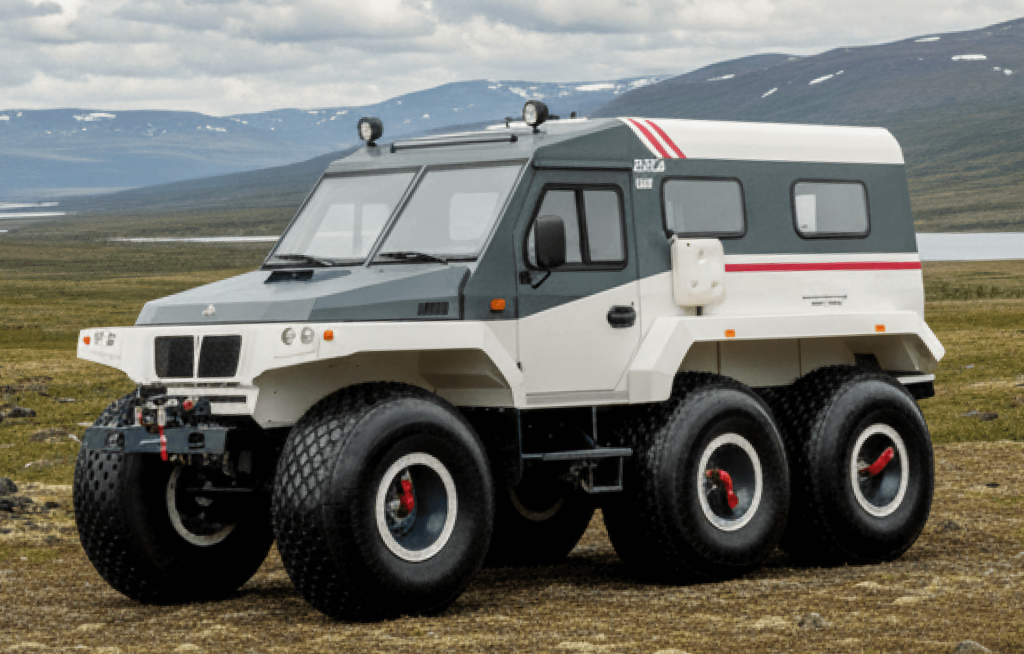 TRECOL all-terrain vehicle is optimized for a different task
The company has a very wide range of wheeled snow and swamp-going vehicles - from relatively compact vehicles to heavy eight-wheeled platforms.
For example, TREKOL-39294 combines 6x6, buoyancy, up to 600 kg payload and high road speed.
But in our system for assessing industrial efficiency, its cargo potential turned out to be insufficient to get into the top three.
This does not mean that TREKOL-39294 is worse.
This means:
“it is optimized for a different task”
For passenger expeditionary work, rescue missions or light mobile teams, this could be an excellent vehicle.
For transportation of heavy technological equipment - no longer.
What about “Siver”?
This is where the situation gets more interesting.
ZVM "Siver" 6x6 has a very attractive price-to-carrying capacity ratio.
For some industrial tasks, he can look even more advantageous than the leaders.
But we did not raise it to the top three only on the basis of passport mathematics.
In our rating, not only the number is important:
“5 tons / 9 million rubles.”
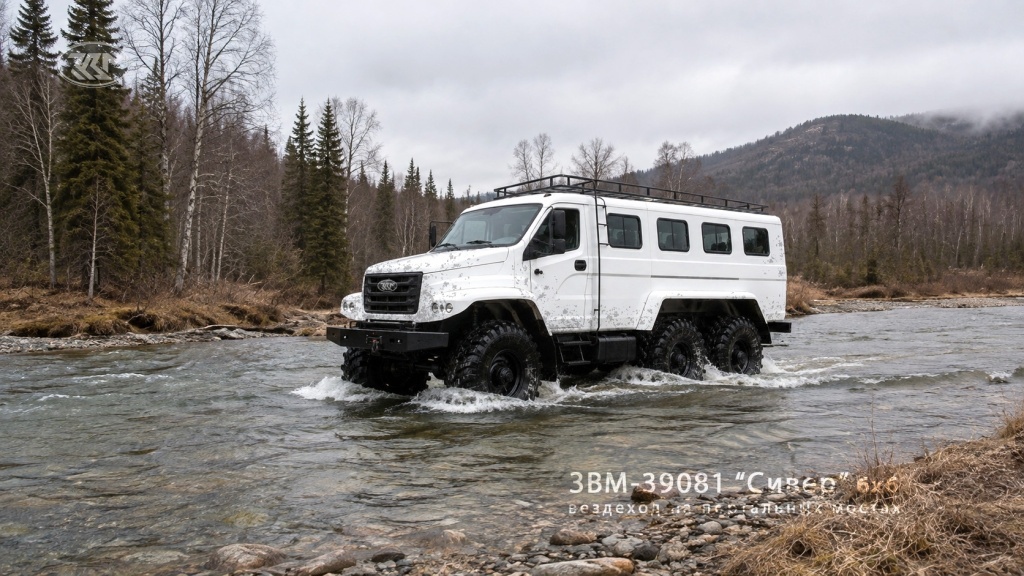 ZVM "Siver" 6×6 has a very attractive price-carrying capacity ratio.
We still need to prove:
- real industrial operation;
- scale of supplies;
- service network;
- repeat purchases;
- sustainability of supplies;
- readiness of the platform for special equipment.
Therefore, “Siver” is one of the main candidates for the next level of the rating, but not yet our No. 1.
Who was left out of the TOP-3?
The top three are not the entire market. And here it is important to make one caveat.
If a car is not in the TOP 3, this does not mean that it is worse than the winners.
Our rating answers a specific question: which wheeled snow and swamp-going vehicles today look most convincing as an industrial tool - taking into account technology, economics, versatility and market demand.
But there are at least three families that deserve a separate discussion.
In the first case, the problem is the position between the classes.
The second is the lack of public transparency of the market.
And the third is that we are no longer facing one car, but a whole system of platforms and special versions.
These are “Baikal”, the “Sever” family and STM equipment.
Two “Baikals” - two strategies: ZTM-30081-10 claims a place among the leaders, “Baikal-Storm 4×4” so far closes the list
Two different vehicles currently bear the name "Baikal," and they should not be conflated within a single ranking entry.
The "Baikal" model ZTM-30081-10 (6×6) is an industrial all-terrain vehicle (ATV) manufactured by TransMash in Nizhny Novgorod. In terms of specifications, it competes directly with the leaders of our ranking: a payload capacity of approximately 2 tons, seating for up to 12 passengers, a top speed of 70 km/h, and low ground pressure. The vehicle is designed for geological exploration, the oil and gas industry, the energy sector, telecommunications, and other applications requiring off-road transport of personnel and equipment.
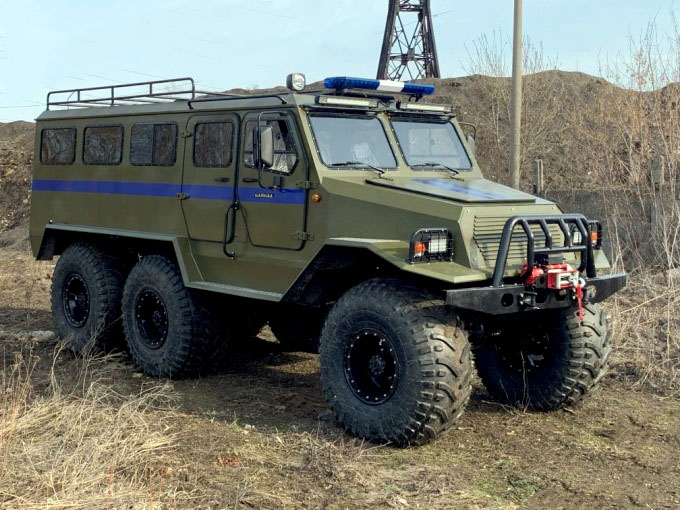 "Baikal" model ZTM-30081-10 6×6 — a promising industrial contender
For this reason, we are including the ZTM-30081-10 in our extended selection as a serious candidate for a potential revision of the Top 3 list. To make a final assessment, however, the vehicle still needs to demonstrate its market viability—specifically regarding serial production volumes, purchasing activity, and operating economics.
Irkutsk’s "Baikal-Storm 4×4" represents a different concept. It is a more compact vehicle designed primarily for mobility and small-team operations. While notable for its combination of off-road capability, relatively compact size, and versatility, it currently trails the "Big Three" in terms of cargo efficiency and proven industrial demand.
Consequently, we have categorized these vehicles differently in our study: the ZTM-30081-10 remains in the direct competitive tier alongside the "Big Three," while the "Baikal-Storm 4×4" is placed in the lower section of the extended sample.
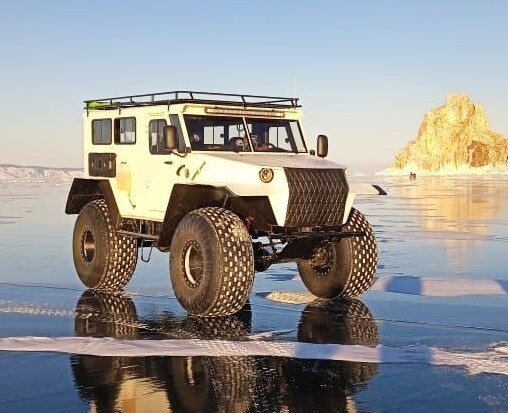 "Baikal-Storm 4×4" — in the lower section of the extended sample.
This serves as a prime example of why comparing model names alone is insufficient for a ranking. A single name can encompass vastly different manufacturers, designs, and market positions.
Has the "Sever" Been Overshadowed by the Leaders—and for How Long?
The situation with the "Sever" is entirely different.
Here, we are dealing not with a single vehicle, but with an entire family of industrial platforms.
The "Sever Profi," "Profi-Max," "Profi-Max Arktika," and other variants allow for a range of applications—from transporting personnel and small loads to handling heavier-duty tasks in northern regions.
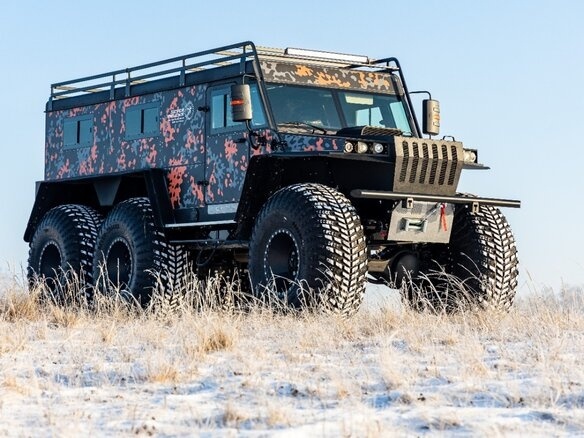 "Sever" is a family of industrial platforms, including the "Sever Profi," "Profi-Max," "Profi-Max Arktika," and others.
That is precisely why comparing "Sever" to a single specific model from the "Top 3" isn't entirely appropriate.
"Sever" possesses the key element: an industrial mindset
The manufacturer specifically designs the machinery for operation in harsh climates and for use in industrial settings.
This represents a completely different approach to all-terrain vehicle design.
It is not: "We built a vehicle that can drive across a swamp."
Instead, it is: "We built a platform that can be integrated into an industrial workflow."This distinction is fundamental to our study.
So why isn't it in the "Top 3"?
The reason is much the same as with the "Baikal," though viewed from a different angle.
"Sever" offers an extensive product lineup; however, within that range, it is essential to make precise comparisons between specific configurations.
Price, payload capacity, engine, tires, configuration, and specialized equipment can significantly alter the vehicle's economics.
Therefore, simply listing the "Sever" alongside the "Burlak" without further distinction would be incorrect.
Furthermore, a vehicle's track record of operation and procurement carries significant weight in our ranking.
And in this regard, the current leaders still appear more compelling.
However, there is one factor that warrants keeping a close eye on the "Sever."
Public and Corporate Sectors
For an industrial ranking, the very fact that a vehicle is approved and offered for competitive corporate procurement is highly significant.
The "Sever" shows signs of precisely this type of positioning: the company works with corporate clients, claims eligibility for tenders under Federal Laws No. 44-FZ and No. 223-FZ, and markets its products as Russian industrial machinery.
If the volume of actual deliveries increases, the brand's standing could change quite rapidly.
That is why we are not writing off the "Sever." On the contrary—
It is a prime candidate for making the biggest leap forward in the next ranking.
While the "Burlak" currently appears to be a mature, versatile platform, the "Sever" is interesting precisely as an evolving family of industrial vehicles.
And here, economies of scale come into play.
The more variants added to the lineup, the easier it is for the manufacturer to meet the specific technical requirements of client enterprises.
Our verdict: while it currently falls outside the top three, it would be incorrect to label "Sever" a minor player.
Where should the STM family be categorized?
With STM, however, a methodological issue arises.
That is precisely why we deliberately chose not to simply lump all the company's products together with the "Burlak," "Khishchnik," or "Veya."
STM is not merely a manufacturer of individual platforms; it is also an integrator of specialized machinery.
Consequently, a single catalog might feature vehicles of vastly different origins: some are based on the company's own platforms, others utilize third-party chassis, and some involve extensive modernization by STM. In other cases, the company's primary strength lies in the specialized equipment and final configuration.
And this is a crucial distinction
Let’s consider a hypothetical vehicle:
third-party chassis → STM → loader crane → drilling rig → living module.
Who is the manufacturer? At the level of the base all-terrain vehicle, it is one company. At the level of the finished industrial unit, it is STM.
If we were to simply list this vehicle in the ranking as an "STM vehicle," we would distort the picture.
However, if we were to exclude it from the study entirely, we would lose sight of the integrator's genuine industrial expertise.
That is why we apply a different principle for STM.
A manufacturer is one thing; an integrator is another.
In our database, we distinguish between the manufacturer of the base vehicle and the manufacturer of the final configuration. This distinction allows us to see the actual machinery production chain.
For example: proprietary platform → STM → truck-mounted crane.
Or: third-party chassis → STM → drilling rig.
Or: third-party vehicle → STM → specialized superstructure.For an industrial client, this last option may be just as interesting.
Because they do not simply need a vehicle; they need a complete technological system.
Therefore, STM cannot be evaluated solely as a manufacturer of all-terrain vehicles
If STM were placed in a standard ranking, it might lose out to a manufacturer that produces just one successful mass-market vehicle.
But if we ask a different question—"Who is capable of turning an all-terrain chassis into a complete industrial system?"—the picture changes.
In this context, STM emerges as one of the most interesting Russian players.
Drilling rigs.
Truck-mounted cranes.
Firefighting versions.
Medical vehicles.
Mobile repair workshops.
Crew transport and specialized modules.
Power generation systems.
This very ability to adapt the vehicle to specific technical requirements constitutes a distinct industrial competency.
That is why STM is being assigned a separate category.
In the next version of the study, we propose not forcing integrators to compete directly with OEMs on the same playing field.
There will be two parallel rankings.
Manufacturer Ranking
Who produces the most effective base vehicle.
Integrator Ranking
Who is best at transforming an all-terrain vehicle into a complete industrial system.
And in this second ranking, STM could well contend for the top spots.
Our verdict: STM should not be excluded from the study. However, placing the company's entire lineup on the same level as standalone OEM platforms is methodologically incorrect.
Three different reasons for falling outside the Top 3
The resulting picture is quite revealing.
"Baikal" — it falls behind not because it is a poor vehicle, but because it operates in a highly competitive landscape and currently trails the leaders in terms of overall proven industrial demand.
"Sever" — this is more a story of future potential. The family of vehicles has sound industrial logic and growth prospects, but its established market presence is not yet sufficient to confidently rank it above the leaders.
STM — that is a completely different story. It is no longer merely a manufacturer of individual all-terrain vehicles, but an engineering integrator. It is more appropriate to evaluate it using a separate scale.
And this is arguably one of the key takeaways of our study: the market for Russian all-terrain amphibious vehicles cannot be accurately described by a single league table.
Coexisting in this space are platform manufacturers, integrators, companies specializing in upgrades, and firms that extend the service life of the vast existing fleet of vehicles.Therefore, the next stage of our ranking must consider not only the question:
"Which vehicle is better?"
but also a far more practical one:
"Who is capable of solving a specific operational task—such as transporting a crew to a drilling rig at a remote site?"
That is when the picture of the Russian market becomes significantly more interesting.
What our research revealed
The most important finding is that the Russian market for wheeled all-terrain vehicles (ATVs) can no longer be viewed merely as a market for "toys for extreme sports enthusiasts."
It is gradually evolving into a full-fledged industrial sector.
Moreover, several distinct classes are emerging within it.
- Up to 1 ton
Veya, TRECOL, and other light vehicles.
Key factors: mobility, fuel consumption, and cost.
- 1–3 tons
Burlak, Khishchnik, and competitors.
In our view, this is the most interesting industrial segment.
Here, it becomes possible to transport not only personnel but also equipment, materials, tools, and specialized modules.
- 3–5 tons and above
Heavy-duty 6×6 and 8×8 models.
At this level, the wheeled all-terrain vehicle begins to compete directly with light tracked transporters.
Key conclusion
Our top 3 list looks like this:
Rank | Vehicle | Why it earned its spot
1st Place | Burlak 6×6 | Best balance of payload capacity, off-road capability, speed, and industrial versatility
2nd Place | Khishchnik | Strong industrial niche + proven track record of operation and procurement
3rd Place | ZVM Veya 4×4 | Compactness, price, simplicity, and efficiency for light industrial tasks
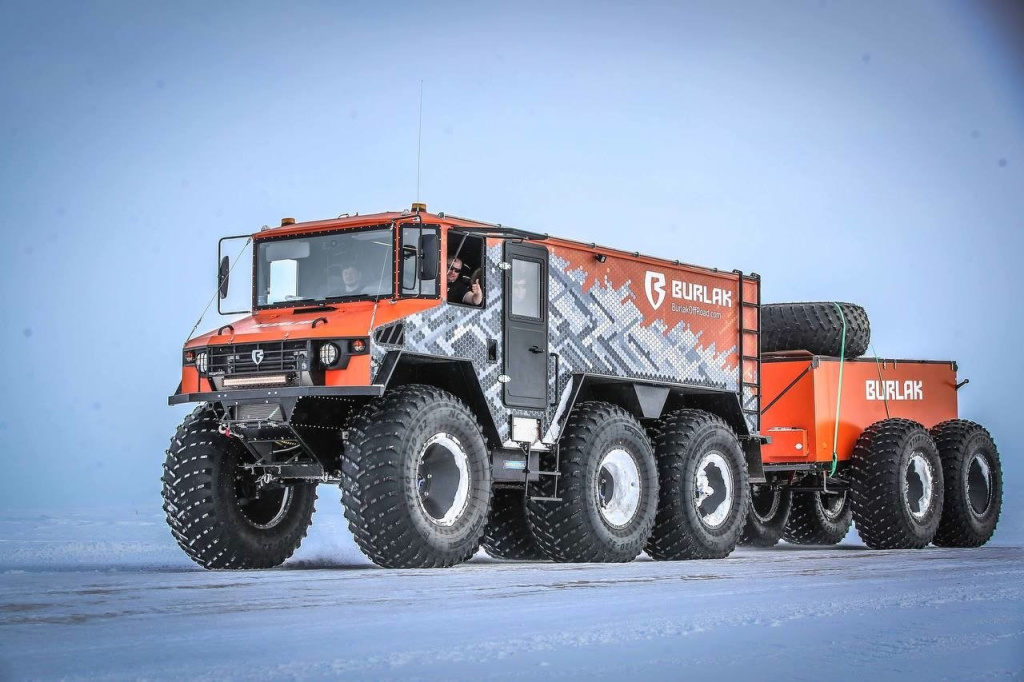 #1 Burlak 6×6 All-Terrain Vehicle – best balance of payload capacity, off-road capability, speed, and industrial versatility
But there is an important caveat.
This is not a ranking of Russia’s "most capable off-road vehicles."
Nor is it a popularity contest among enthusiasts.
Our ranking is an attempt to answer a much more practical question: "Which Russian wheeled all-terrain vehicle holds the greatest potential specifically as a working industrial tool?"
And today, the answer to that looks exactly like this.
Conclusion
The Russian market for wheeled all-terrain vehicles (ATVs) is developing in several directions simultaneously.
Some manufacturers produce maximally simple and affordable vehicles for small teams.
Others create heavy-duty 6×6 and 8×8 models capable of hauling tons of equipment.
Still others transform these ATVs into versatile chassis for drilling rigs, truck-mounted cranes, living modules, and power generation or emergency response equipment.
Therefore, the winner is determined by more than just the vehicle's specifications.
The winner is the one that best suits the specific operational task.
The "Veya" might be ideal for a small geological survey team.
The "Khishchnik" ATVs are suited for heavy-duty work at remote sites.
However, if a versatile wheeled platform with significant load-carrying capacity and a wide range of applications is required, the "Burlak" 6×6 appears to be one of the most balanced solutions available today. That is precisely why we rank the "Burlak" 6×6 first.
Yet, the market is far from having a settled competitive landscape.
In future studies, it will be particularly interesting to compare these vehicles not just against each other, but against light and medium tracked all-terrain vehicles.
For that is precisely where the real dividing line lies: the point where wheeled vehicles become more advantageous than tracked ones—and where tracked vehicles still reign supreme.
Editor's Note
This ranking is based on publicly available technical and market data. We do not automatically accept a manufacturer's promotional claims as proof of operational superiority.
The comparison took into account technical specifications, cost, configuration options, intended industrial use, the availability of service infrastructure, and evidence of actual purchasing activity.
Russian government and corporate procurement data were considered separately, as was available market data from Kazakhstan.
In cases where a manufacturer does not disclose reliable data regarding service life, maintenance costs, component prices, or actual fuel consumption under specific operating conditions, we do not substitute assumptions for the missing information.
Therefore, this ranking should be viewed not as absolute truth, but as a structured model for selecting industrial equipment manufacturer.
And that is precisely the goal: not to decide for the enterprise which vehicle to buy, but to highlight the questions that need to be asked before making a purchase.
Prepared by the Digital Communications Department of Zavod Vezdekhodnykh Mashin LLC
For inquiries regarding the use of materials:
digital@zvm-nn.ru | © 2026